Steve Deeley

Naturalist. Nature writer. Nature photographer.

A Hairy encounter

My ongoing search for the Duke continued last night. After work,I fought my way through heavy rush – hour traffic to Stroud, a one-hour journey that took me closer to two. I parked up and set off down the slope of the Hill to the place where I’d seen the Duke the previous evening.  And as I had the previous evening, I saw it settle three times, but each time (as it had the previous evening)it flew off just as I was bringing my camera to bear. for the rest of the three hours I was there, I had to just stand and watch as it flitted relentlessly around, without ever once stopping. I’ve started to really, really hate that insect, which is an odd position for a naturalist.

But just as with my last visit,the evening brought an unexpected compensation.  As I was driving home, disconsolate, and full of evil thoughts about spraying the bushes of Stroud with superglue, I glanced to my right and saw a Hare sitting in a field, very close to the road.  Unfortunately there were no turning spaces on the road for a couple of miles, so it was a good 10 minutes before I could throw a U – turn and come back.  There was a small layby very near to where I’d seen the Hare, so I stopped and got out.  Traffic on this road travels very quickly and makes a lot of noise, so I was able to open the boot of the car and get my camera out without any sound being audible.  It seemed that the photographs smiling me, because there was also a small gap in the roadside hedgerow that led into the very field where I’d seen the Hare.  I picked my camera up and started to push my way through the hedge, only to stop short.  For while I’d been driving back, the Hare had been hopping slowly forwards, and I realised, to my horror and delight,that he was barely 6 feet in front of me. If I moved, I would startle the Hare, and there was every chance that he would Sprint off far faster than I could get my camera set up to take a picture.  Worse still, he might never return to that field if he’d had a bad experience there.  So I had to grit my teeth and wait as he slowly moved away before I could set my camera up and take his picture.
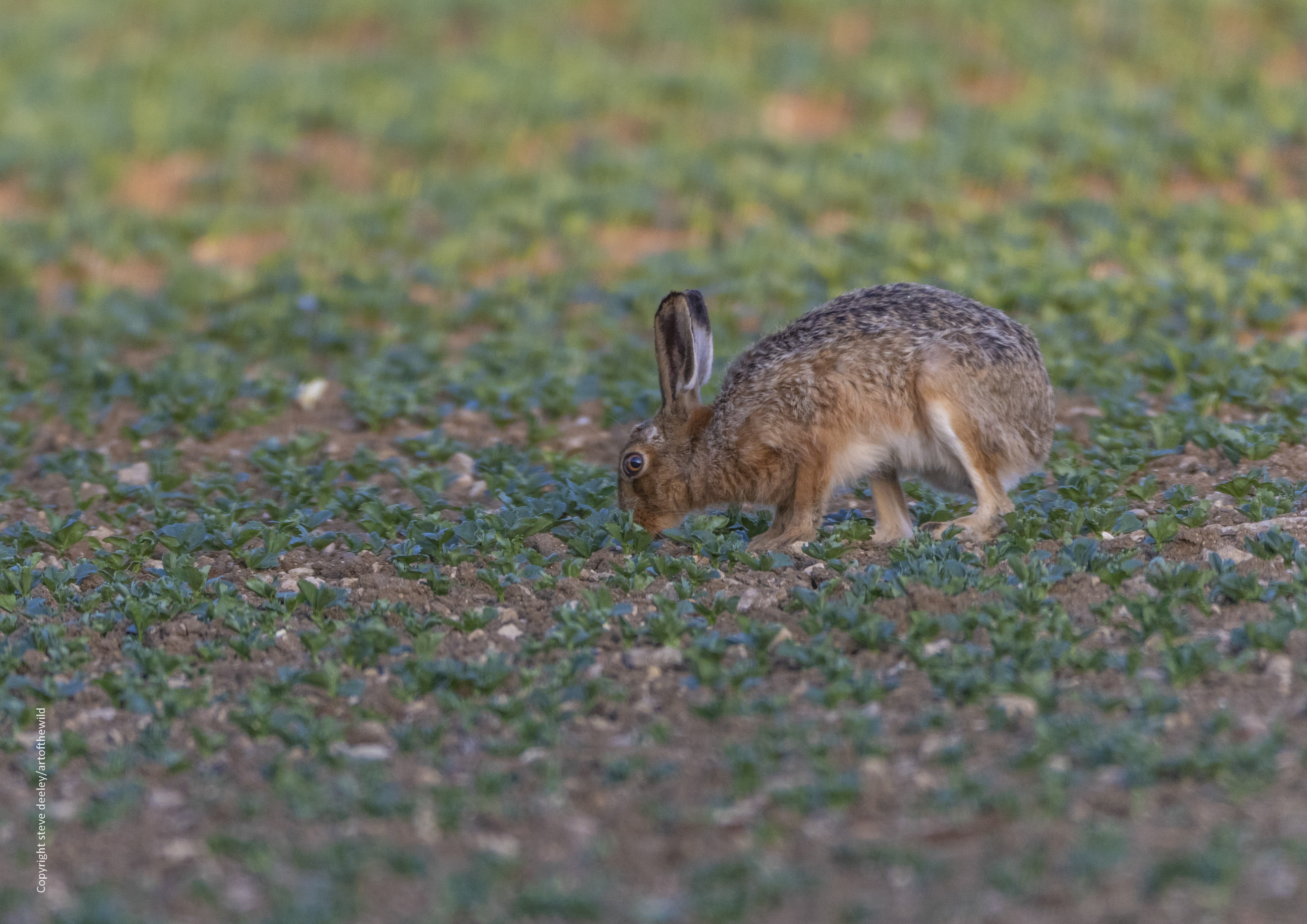
Wiltshire was, sadly, home to the completely illegal hare – coursing world Championships this year.  Many fields of hares that I’d watched over the years had been wiped out, so it was a joy to find not one Hare, but two, grazing in the field.  And at least now I know that if I have a bad day with the butterflies, I may yet have a happy day with the hares.
larking around

This weekend I went looking for my old nemesis: the Duke of Burgundy butterfly.  It was a stinking hot day and as is usual with the Duke, who adores steeply – sloping sites, I ended up climbing up and down hills in the blazing sun.  Although I saw the butterfly twice, I couldn’t get a picture of it.  To rub salt into my wounds, I bumped into a young couple with a dog who proudly showed me a stunning picture that they had captured on their iPhone earlier that day.

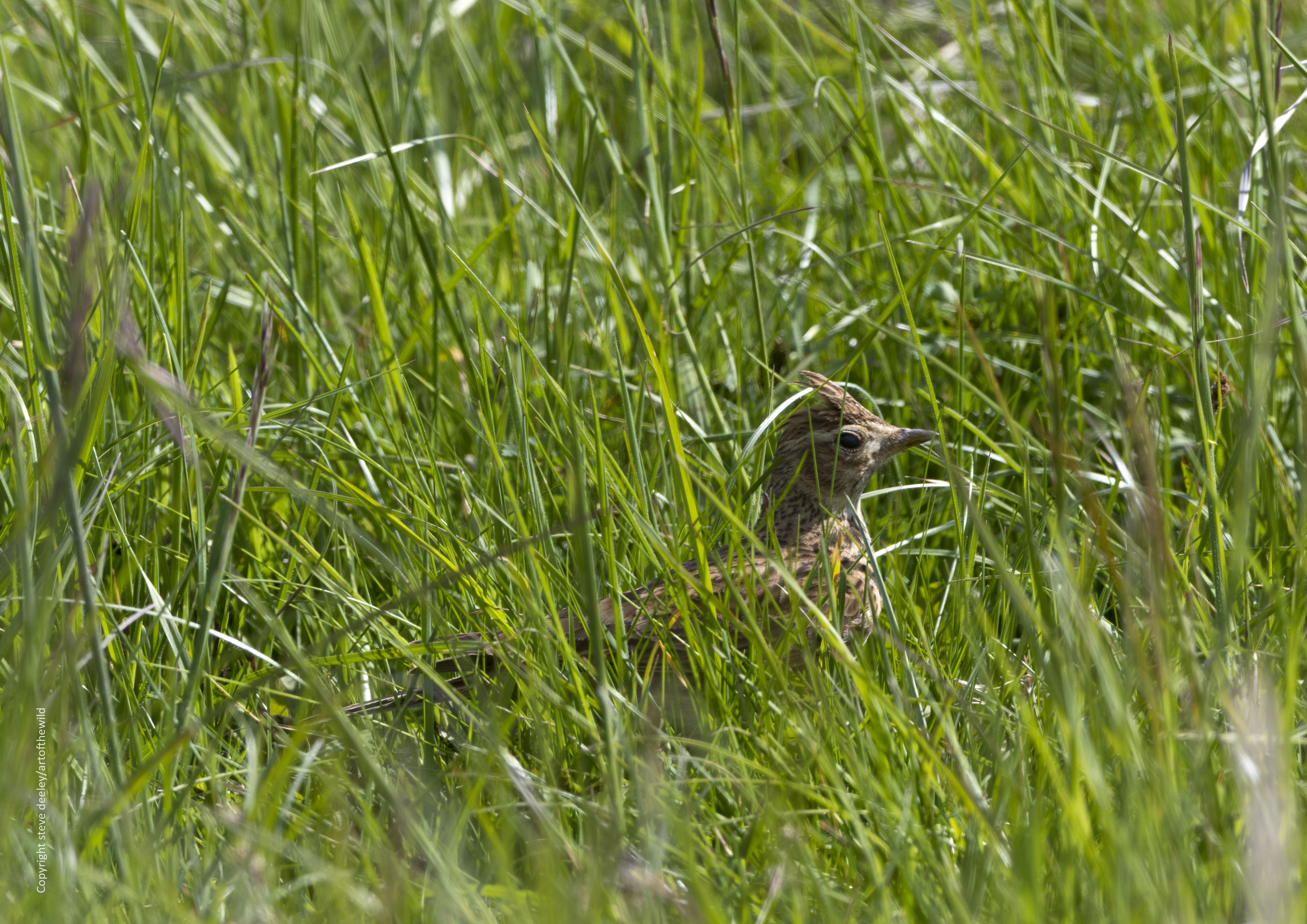
But, as quite often happens with wildlife watching, the day wasn’t without its rewards.  In the skies above me, I could hear the beautiful, lilting song of the Skylark, as evocative of warm summer days as the smell of newly-mowed grass.  That by itself would probably have been enough to make the day a winner, but then I noticed a Skylark fly horizontally quite close to the ground, and land in a bush near to me.  I took some photos, and thought little of it until I noticed a second Skylark nearby.  I sat down with my camera (and my lunch!)  and watched as the pair as they hunted for grabs in the grass, gradually getting closer to me. The Skylark is a bird that is normally elusive and extremely hard to see, but to my surprise, this pair were happy for me to get very close indeed –  they seemed quite relaxed around people, and I got spectacular views of the female Skylark in the grass.


The Skylark is a long, graceful bird, a little smaller than a Blackbird. the Skylark has a Brown – and – cream speckled further pattern, very much like a thrush, and as you can see this image, it also has a small tuft feathers on its head which you can raise and lower rather like the spoiler on a high – end car.  It’s used for signalling and displays.

Despite spending another two hours hunting for it after seeing the Skylarks, I never did manage a photograph of the Duke of Burgundy.  One of the joys following wildlife is that every year you get another chance a spring rolls in again.  So I know that in early May of 2019, be walking the slopes again in the hope the grand old Duke is flying.

A small dot of green and an ambition fulfilled

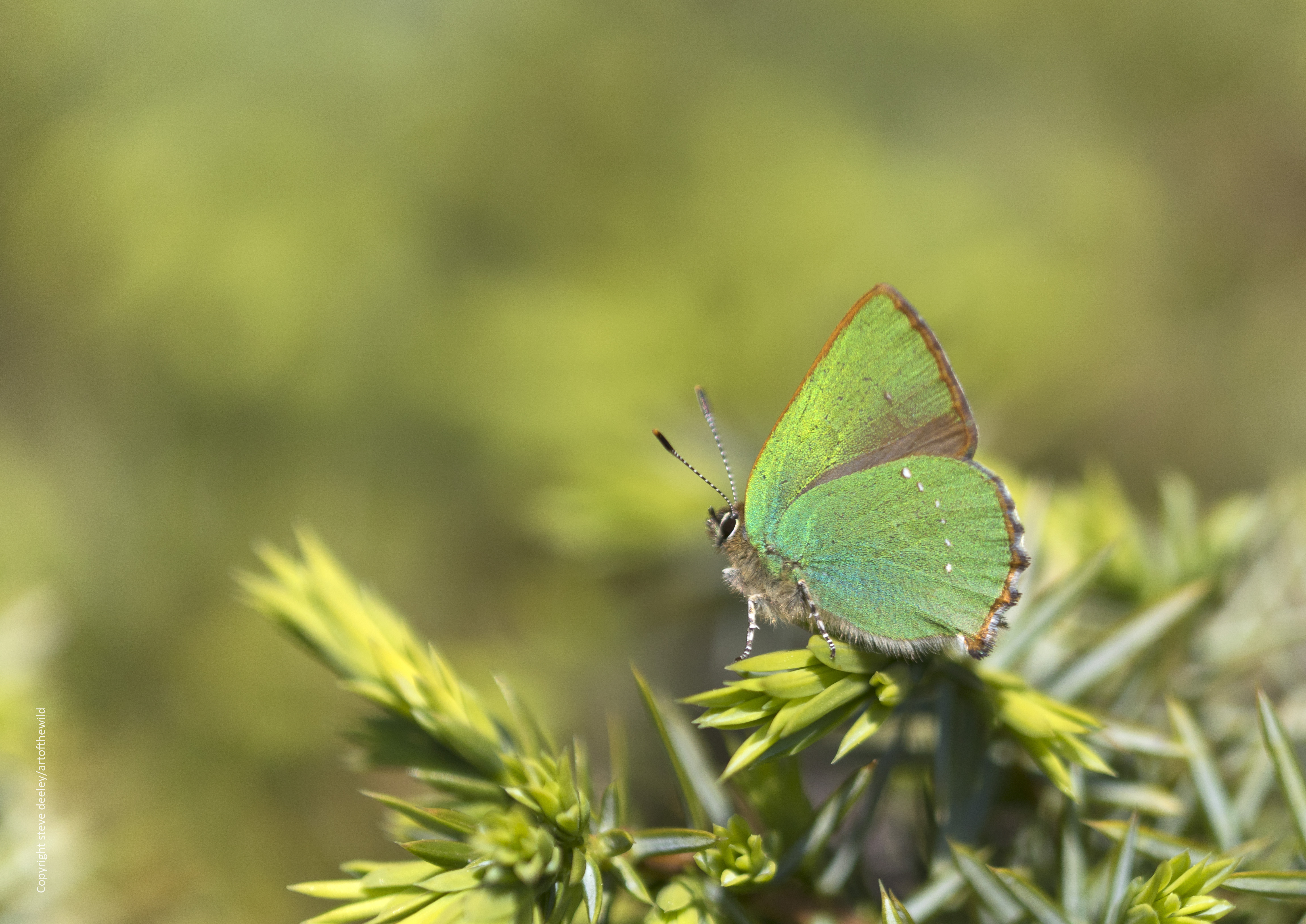
The Green Hairstreak is a tiny butterfly- the closed wing is little bigger than the nail on my little finger. In a perfect demonstration of the value of doing your homework first, I thought I had seen one some years ago, because the Green Hairstreak is touted as the UK’s only green butterfly, and I’d seen a green butterfly before. This one had a wing the size of the lens on my glasses, so I thought that that was what they looked like. In fact, that butterfly was a Brimstone, a yellow butterfly that occasionally comes in a pale green variation. So I’d spent  a lot of time looking for a buttterfly which was the wrong size and didn’t exist. The penny dropped when I was looking for Large Blue butterflies early one morning and got a brief flash of dazzling green from a gorse bush. It came from a tiny green metallic butterfly, which stayed long enough for me to look at it for a second before flying away. Ever since, I’d wanted to see one again.

Today I got my chance. I’d been on a fruitless search for the Duke of Burgundy butterfly, which is a similar size to the Green. I was walking despondently back to the car when I caught a movement of a small butterfly. My heart did a quick double-flip: It was the Duke! No, it wasn’t. But it’s a Green Hairstreak! Yes, I’m sad enough to get that excited. This small  Butterfly is actually brown from above, but always settles with its wings closed, so we see the beautiful metallic green of its underwing. This one was a male: I watched it rise to attack a couple of common blues when they strayed over its territory. Unfortunately the territory it was defending was behind a barbed-wire fence, which I spent so long leaning on that I came home with a series of puncture marks on my arm. But that’s a small price to pay to finally get up close and personal with the Queen of Green (OK, this one was male, but don’t spoil the ending, okay?)


Good winters make bad summers

It’s official: it’s not just my imagination. I went hunting today for the duke of burgundy butterfly again. It’s the peak of the flight season and I’m in a place where I’ve seen them before in decent numbers ( and for a butterfly as scarce as the duke, that’s threes and fours, not tens or hundreds. I got a brief glimpse of one. Butterfly numbers are down. The unseasonably mild weather we had earlier in the spring followed by intense cold seems to have brought some species forward, only to hammer them. I bumped into bird ringers in a local woodland who gave more evidence: bird numbers and bird weights are down. It takes 1000 caterpillars to feed a bluetit chick, so even a slight fall in numbers has a big impact on brood sizes. It seems the countryside will be less full of colour and dong this year.

Child cruelty in Grebes

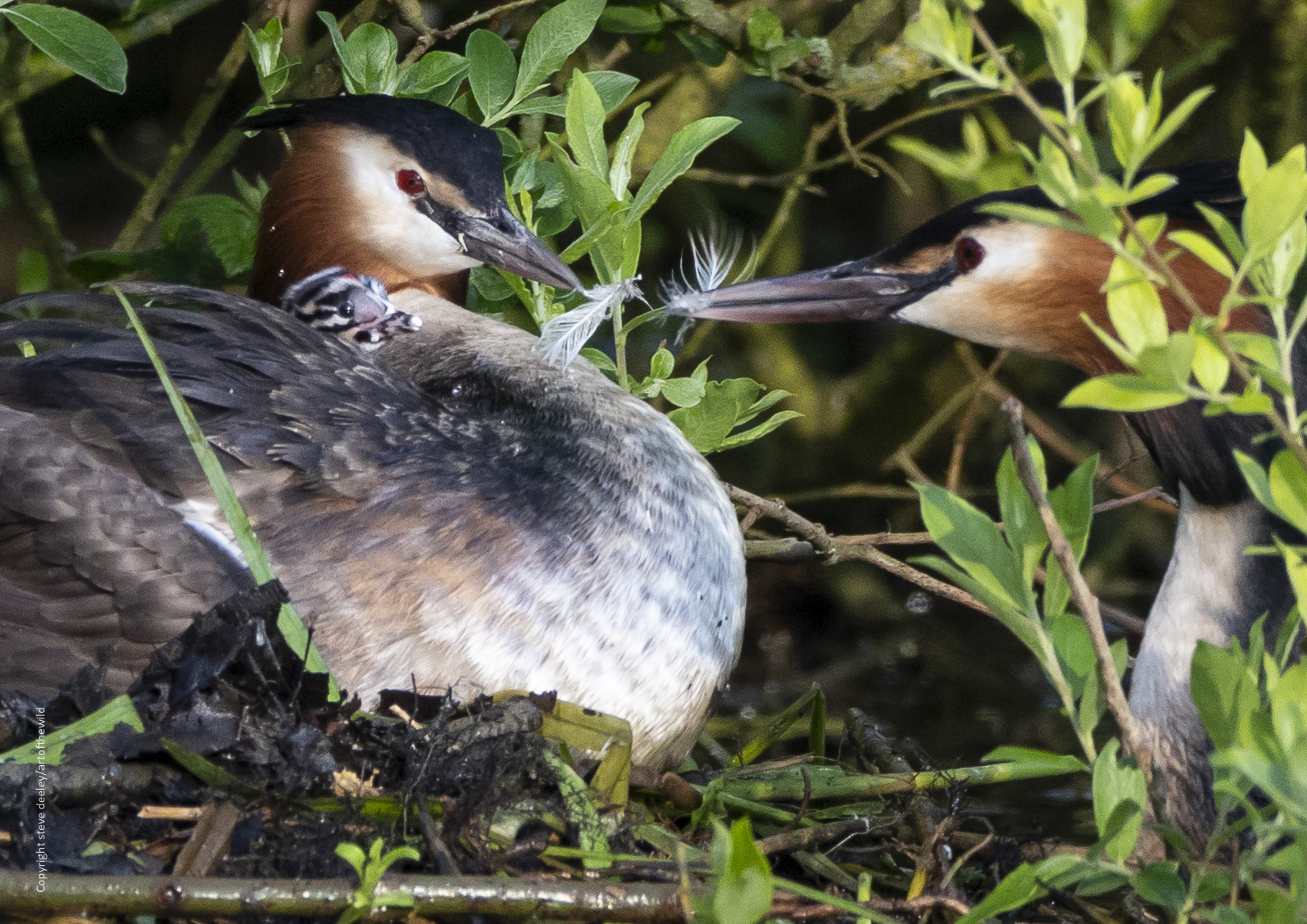
I was photographing Great Crested Grebes at a local lake today, when I saw a behaviour that is known, but which I’d never seen before : eating feathers. The parent Grebes were taking feathers from their breasts, dipping them into the lake water, then feeding them to their chicks. The current theory is that feathers (which adult Grebes eat as well) help protect the stomach from fish bones and assist in pellet formation, but the evidence is slim  and a more honest answer might be that nobody knows why the Grebe does it. It seems to be the only bird in the world which does.


The Whitebell vanishes

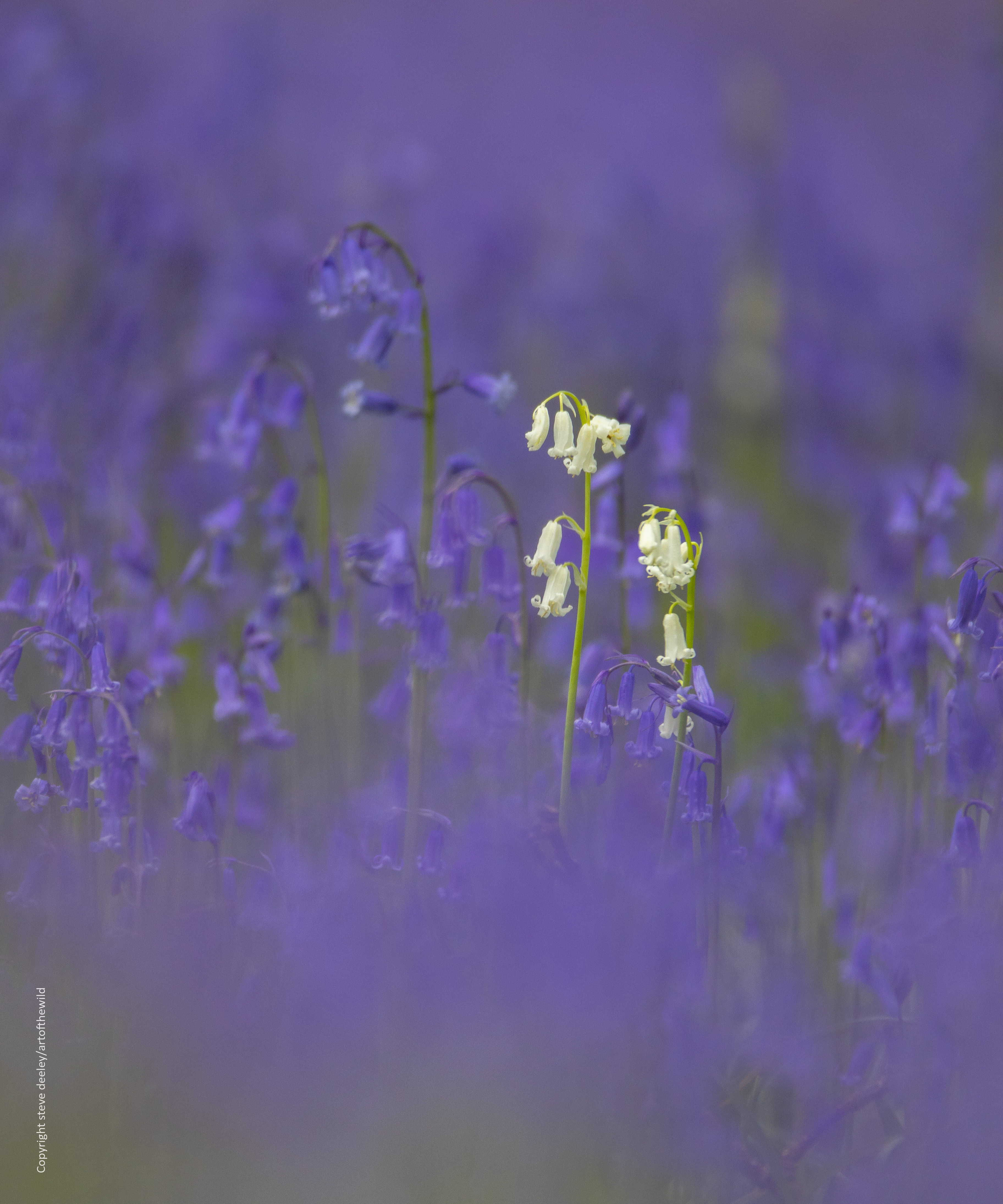
I was in a local bluebell wood the other day, trying to find a new way of showing the beauty of these plants. I failed as usual, simply because they are so stunningly beautiful that it’s hard to find an image that does them justice. I particularly like trying to photograph the occasional Whitebell that crops in the midst of the sea of blue – I suppose because they feel a bit like the plucky underdog. The job was made harder by the inclement weather, with dark clouds regularly scudding in front of the sun.

Then I noticed something odd. When the sun was behind the clouds, I could see the Whitebells clearly in the sea of blue. But when it came out, they seemed to disappear. Often I couldn’t find the flower that I had intended to photograph.

I read somewhere years ago that one reason why bluebell woods are so lovely is that the flowers capture a lot on the incoming light, including some of the invisible ultraviolet light, and re-emit it as blue light. In other words, they fluoresce slightly. I have no idea if that is true, but it would perhaps explain my vanishing whitebells. When the sun strikes a patch where both flowers bloom, the white bell shines in the sunlight, but the bluebell shines more because it is not just reflecting the visible light but using a chunk of the UV spectrum as well. If I had the time and the (very expensive) equipment needed, I’d love to analyse the light from the bluebells and see if this theory is true. But it doesn’t matter – all it means is that Bluebell woods look beautiful whether the sun is out or not.

Habitat Destruction

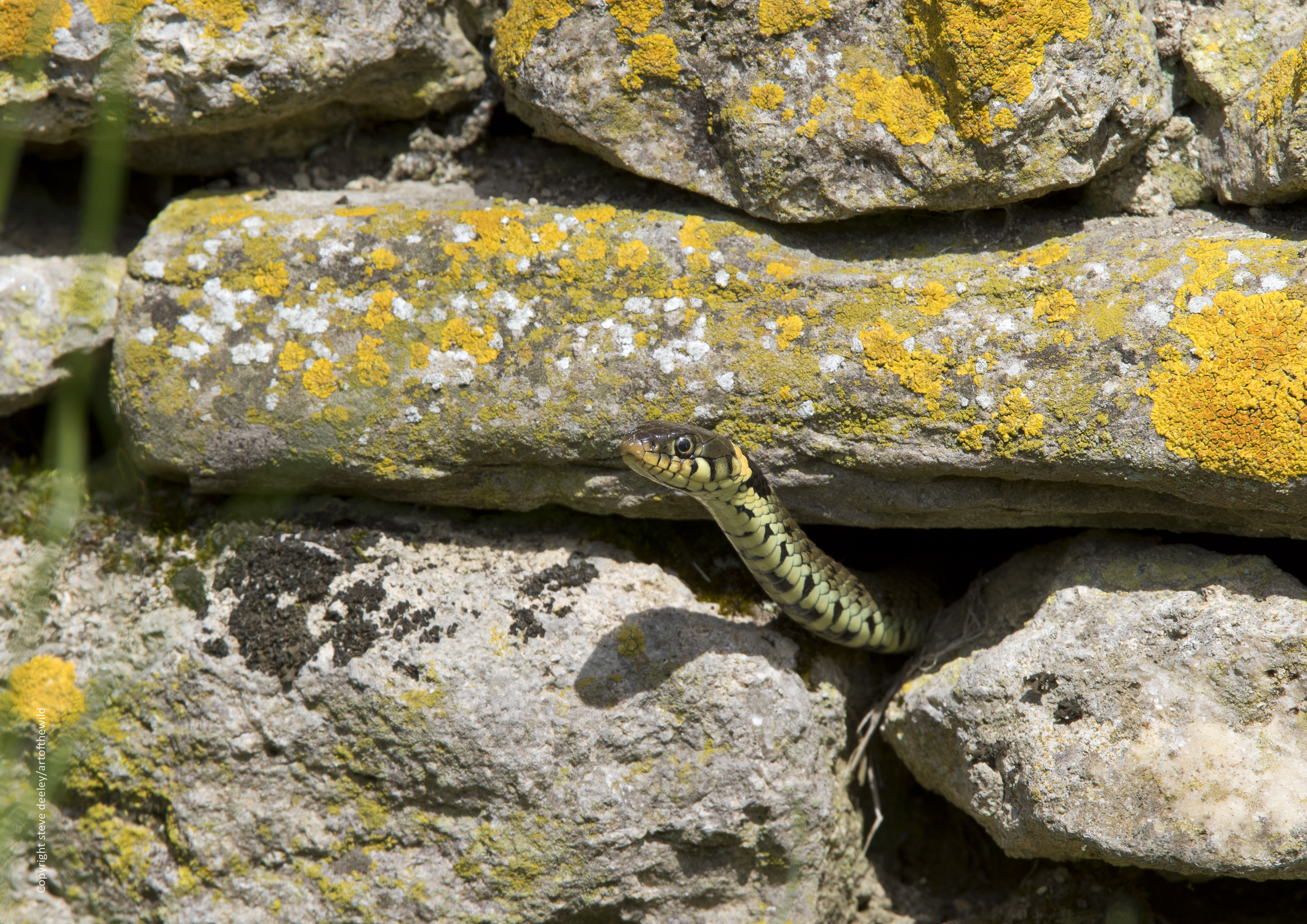
When people talk about destruction of habitat, I immediately think of burning trees in the Amazon, or the bleaching of the Great Barrier Reef. And those things certainly count. But it is a mistake to think of habitat destruction simply on the large scale. In March last year I revisited a site I’ve been to many times, to watch grass snakes emerge. Now I know snakes aren’t everyone’s cup of tea, even if they are the harmless Grass Snake, but like all wildlife, they need places to live and bred, and like much wildlife, a place to hide away from the cold of Winter. Snakes use “hibernacula”, communal places, often under piles of stones or logs, where dozens of snakes may lie together. Some may travel several kilometers to join one. So teh loss of a hibernaculum may be a fata blow not just for a single snake, but for dozens of them.

The site I was visiting was a Grass Snake hibernaculum, part of the wall of a n old “ha ha” – a wall which has ground level with the top on one side, and level with the bottom on the other. They are a brilliantly clever idea, used to farm animals off the manicured lawns of posh houses without spoiling the owner’s views with ugly walls or fences. Like most posh houses, this one has fallen onto

hard times and its ha-ha wall, several feet high, has plenty of nooks and crannies – ideal for snakes to hibernate in.

Male Grass Snake emerging from Hibernaculum

Male Grass Snake emerging from the Hibernaculum


Unfortunately, the owners, unaware of the snakes’ presence, had decided that he wall was becoming unsafe and needed pointing, and that the colder months was the right time to do it. When I arrived to watch the annual show, the grass snakes were nowhere to be seen. I hope that the removal of rocks for re-playing had scared them out before the mortar went in, but even then a snake at large in the winter is unlikely to survive unless it can find shelter very quickly.

The owners of the wall did nothing wrong. The wall was unsafe and a danger  to people I doubt that they even knew the snakes were there. But even so, the destroyed habitat probably resulted in the death of many snakes. If you don’t like them, replace “Snakes” with “Badgers” or “Elephants”and see how you feel. Micro-habitats like the Ha-ha wall exist all over the place – there is evidence now that back gardens, with their plentiful bird feeders, are affecting bird migration routes and contribution to the preservation of some threatened species. So when someone tells you to strip Ivy from a tree or knock down that old shed, give a thought to the wildlife that may be in it  or which might need it. And never underestimate how small changes that you can make can add up to a big impact in favour of wildlife.

Sadly, I came across another example of this problem this year. I was watching some Kestrel when I realised that they must be nesting in a nearby copse. When I went to look more closely, I found that just two treed down  from the Kestrel nest, was a Barn Owl nest

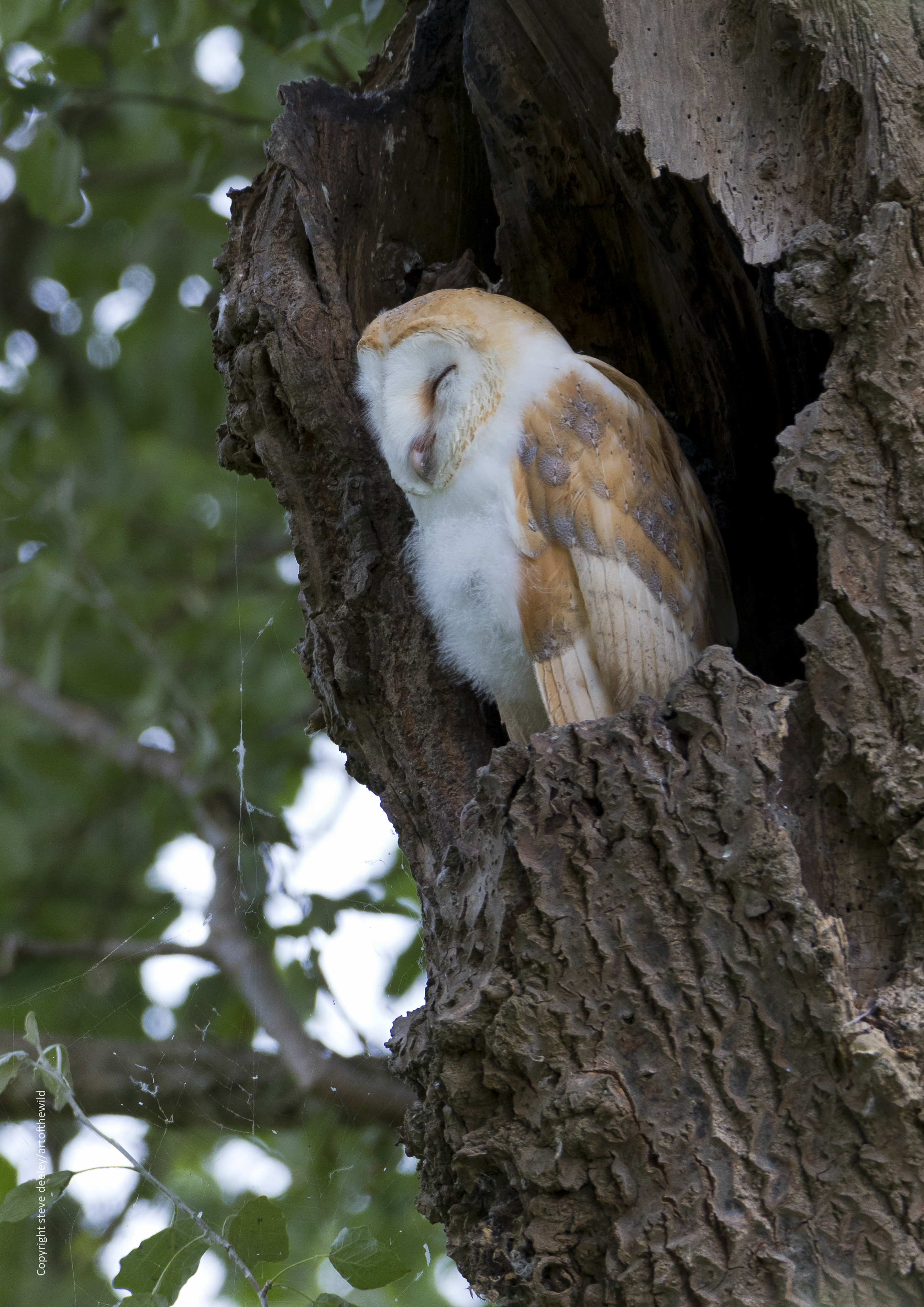
Barn owl chick dozing

Barn owl chick dozing**

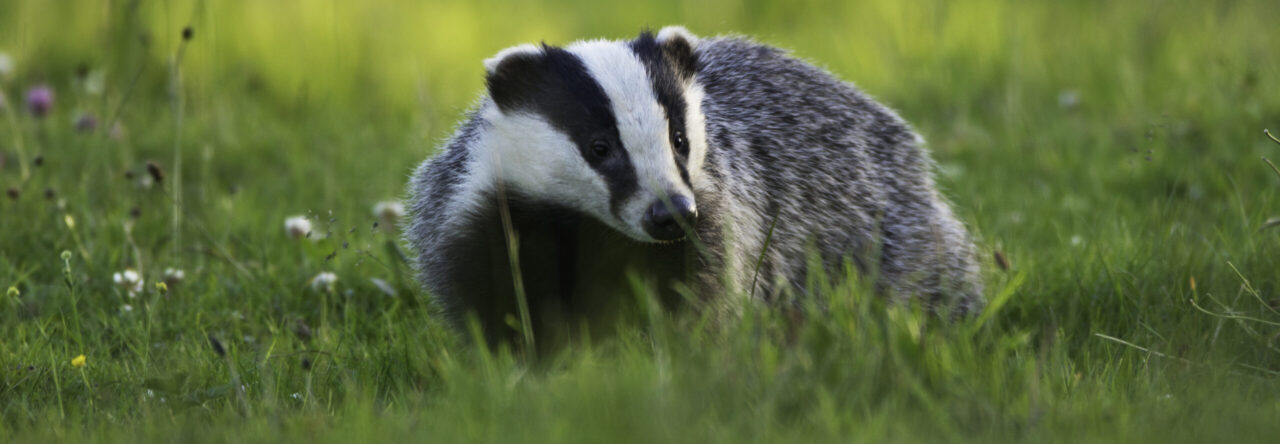
As well as the Barn Owl nest, there was a Red Fox earth nearby, and evidence of either a Weasel or a Stoat. What’s the relevance? Simply that in two year’s time, this copse will be underneath a road, and all of the unique habitat that allowed so many species to live so close together will be under a housing estate. The houses are for people who badly need homes. The habitat loss, taken in isolation, can’t outweigh that. But nobody (as far as I’m aware) is seeing if the sum of a myriad of small local losses of habitat is adding up to something far more devastating on the national scale

**Barn Owls are strongly protected by law. Schedule 1 of the Wildlife and Countryside Act makes it a criminal offence to disturb them at or near the nest. But these Barn Owls chose to nest right next to a footpath that is used daily by large numbers of people and dog-walkers. They are used to humans moving around nearby, and my images of them were taken with a very long 600mm lens from behind camouflage. They are also used to shutter noise, so much so that  this one fell asleep while I was photographing it

The rustler in the reeds

I always thought that wildlife photography would be about what I could see. But quite often, the biggest clue to some well hidden wildlife is sound. Rustling is always something I’m interested in (the sound, that is, not pinching cattle).

Today I was too tired for a long expedition so I went to my local park. There’s a section of derelict canal that’s always good for something. I went expecting butterflies (in fact, I didn’t see any) or birds.  There’s little water in  this canal, it’s more of soggy ditch filled from side to side with deep mud and reeds.

About halfway along the canal I heard a rustle, so I stopped. Standing still is not something I find easy, but in this case I happened to have two feet flat on the ground rather than being in mid-step like I usually am when I hear something.  There it was again: a definitive rustle in the reeds.

Slowly, carefully, I set the tripod I was carrying down and eased my camera strap over that annoying patch on the shoulder of my camouflage jacket where it always gets stuck. I did a silent contortionist act, trying to shrug the strap off my shoulder without making any koise at all. The rustle came again, and this time it was a loud rustle.

Now the kind of rustle matters. Little rustles are often blackbirds foraging through leaf litter or wrens hopping through undergrowth. They can be voles or shrews working their way through tunnels in the grass or up bushes. They can be small birds like red warblers pushing through reeds. Bigger rustles can be badgers, foxes, rabbits or hares or stray dogs. Bit thus was a BIG rustle. It was no bird. We were into mammals of some kind.

And then, as I watched, the bulrushes started to shake violently, whippoing back and forwards. This was accompanied by a crunching sound. Something was eating the reeds, and whatever it was , it was a big animal. There was only one candidate: it had to be a deer, and it was less than six feet away from me.

But the problem is: I’m on the bank of the canal and the deer is on the bottom. Despite it being so close, all I can see are the tops of the reeds. As I watch, a new set of reeds start to shake violently. My deer has moved forwards.

Inch by silent inch, I move forwards along the top of the canal bank. It’s buried in long grass and moving quietly is very difficult. I finally manage to set my camera up and wait without falling down the bank

For the next half hour, I wait, hoping for a glimpse of the deer as it grazes the reeds. I manage to follow it by moving slowly whenever the wind blows  (it’s an old hunting trick: as long as you are moving in the direction of the wind, then wildlife expects to see movement and is distracted by it  – and in fact, you can often give yourself away if you are tracking wildlife and you don’t move with the breeze). But no matter how much I move, I can’t see the deer. By the time I leave, an hour later, I’ve been just feet from a mammal I’d love to photograph, but I haven’t even seen it. Sometimes, the other team wins


The Art of Silence

It sounds like an obvious thing to say, but most wildlife isn’t keen on loud noises. Go into a woodland with a marching band and your chances of seeing anything more than insects are pretty remote.

So as a wildlife photographer, I’ve had to learn the art of sitting and walking quietly. It’s not an easy thing for a tubby 53-year old. I’ve learned that you have to walk very slowly – it can sometimes take me an hour to cover a hundred yards. I’ve learned that you need to have shoes which are comfortable, soft-soled and not made of leather (which has an unfortunate habit of creaking or squeaking at just the wrong moment. And I’ve learned to hate gravel paths and beech trees.

Don’t get me wrong, I love Beech trees. They are my favourite tree – graceful, smooth-barked, with leaves that are an astonishing shade of green in the spring. But Beech trees produce nuts – Beech “masts” – in abundance, and these little dried-out pods little the ground and crack when you step on them. Walking near a Beech tree is like walking on a layer of bubblewrap or Rice Crispies. You have no chance at all of doing it quietly.

It  was 8am and I was walking in the Savernake Forest, near Marlborough, Wiltshire when a movement caught my eye. It was a Roe Deer doe, a large female, and she was no more than 30 or so feet from me. Despite the fact that I was upwind, she seemed unsure of what I was. She hesitated. I did what I always do when I first spot wildlife – I stood completely still, and she gradually relaxed. I got a couple of shots off, although it was too dark in the shade of the trees for anything good. It’s just starting to be Roe Deer rutting season and I started to hope she might lead me to a herd nearby that I could photograph.

She started moving towards a small pool of light that was penetrating the trees, and I had to turn to follow her -but I had forgotten that I was standing under a Beech tree. I moved my foot slightly, and a sound like machine-gun fire or popping corn echoed around. The Deer startled, and bounded away. I never saw her again. Despite the fact that it cost me a picture of a species I enjoy being near, I can’t get cross about beech trees. They are the queens of the forest – tall, graceful and imperious. Beech nuts support a wife variety of birds and animals. The noise factor is a price I’m happy to pay. Usually.


A childhood revisited

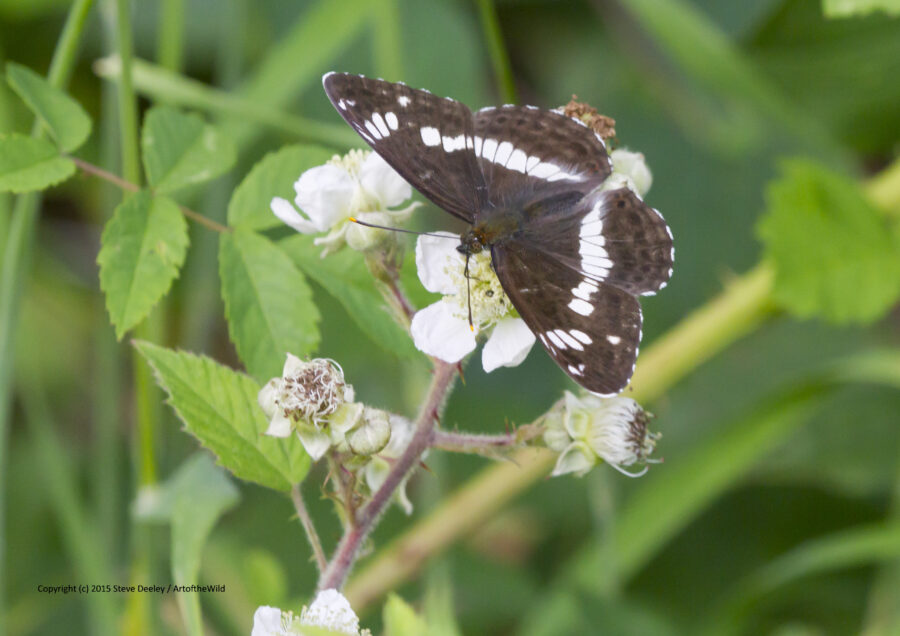
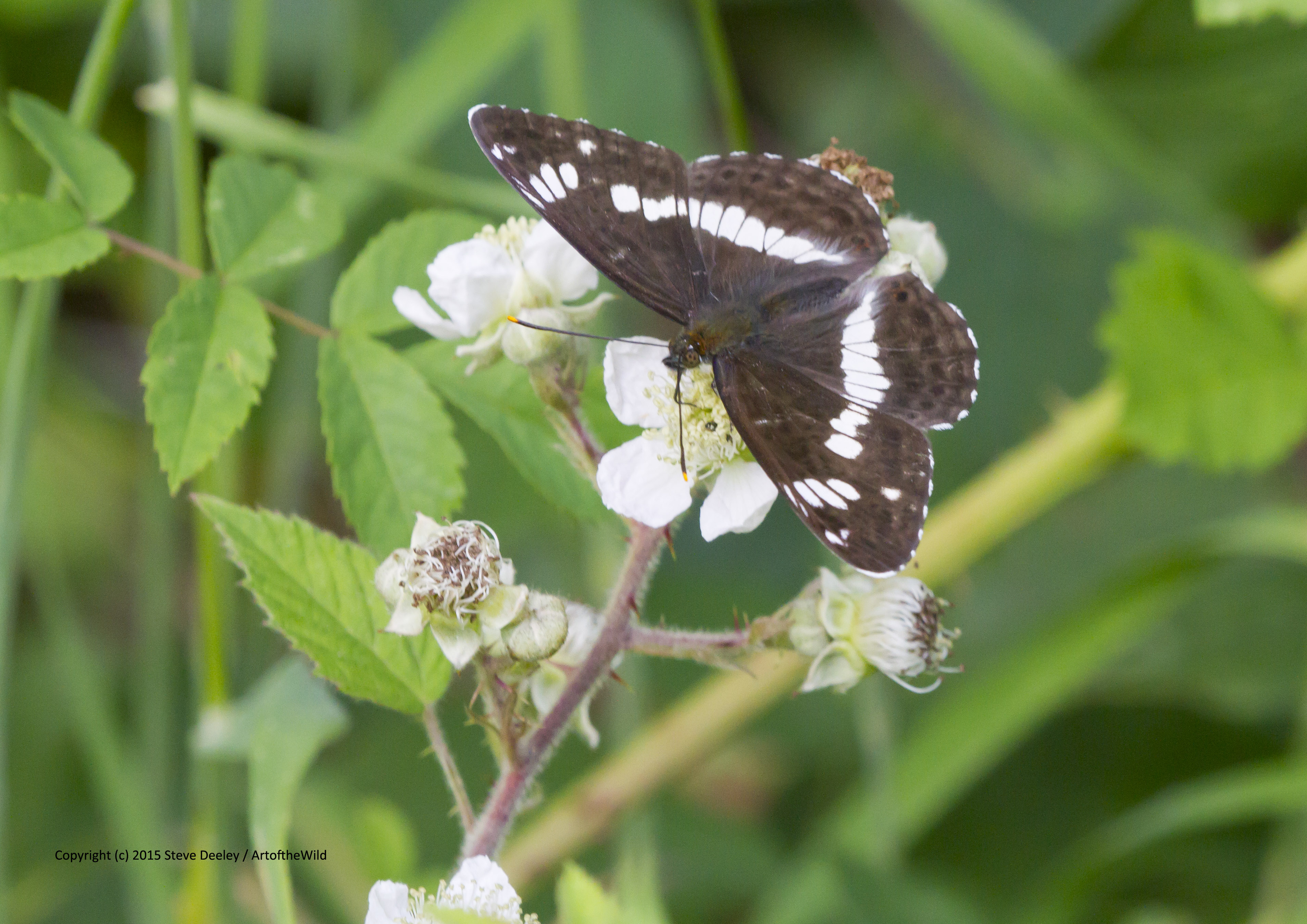
Today I saw and photographed my first white admiral butterfly. It’s a relatively scarce butterfly, but that wasn’t why I was so excited. You see, when I was a child I had a book on butterflies and was fascinated by the white admiral and purple emperor. I spent many hours trying to spot them in and around my home in Gloucester – fruitlessly, since they don’t appear in many housing estates.
But all of that means a that today’s small accomplishment was the final fulfilment of a childhood dream – wel, part of it anyway. Sometime soon I’m going to go and look for the purple emperor, too.


IMG_4926m1ct

Page 8 of 8

Powered by WordPress & Theme by Anders Norén