Naturalist. Nature writer. Nature photographer.

Month: June 2018

Sometimes, the gods smile

I’ve been photographing wildlife for a while now, and getting a dry day with no photos is not unusual. Monday was a very dry day, in very sense – baking hot and I saw next to nothing, which was doubling upsetting because I’d driven hundreds of miles and taken some leave to try and photograph several hard-to-see butterflies. So when Tuesday, my last day, dawned I decided to be up early but stick to my local patch. The woodland was cool and damp and I had hardly entered when I saw a Roe Deer buck grazing. It spotted me, hesitated and trotted away.

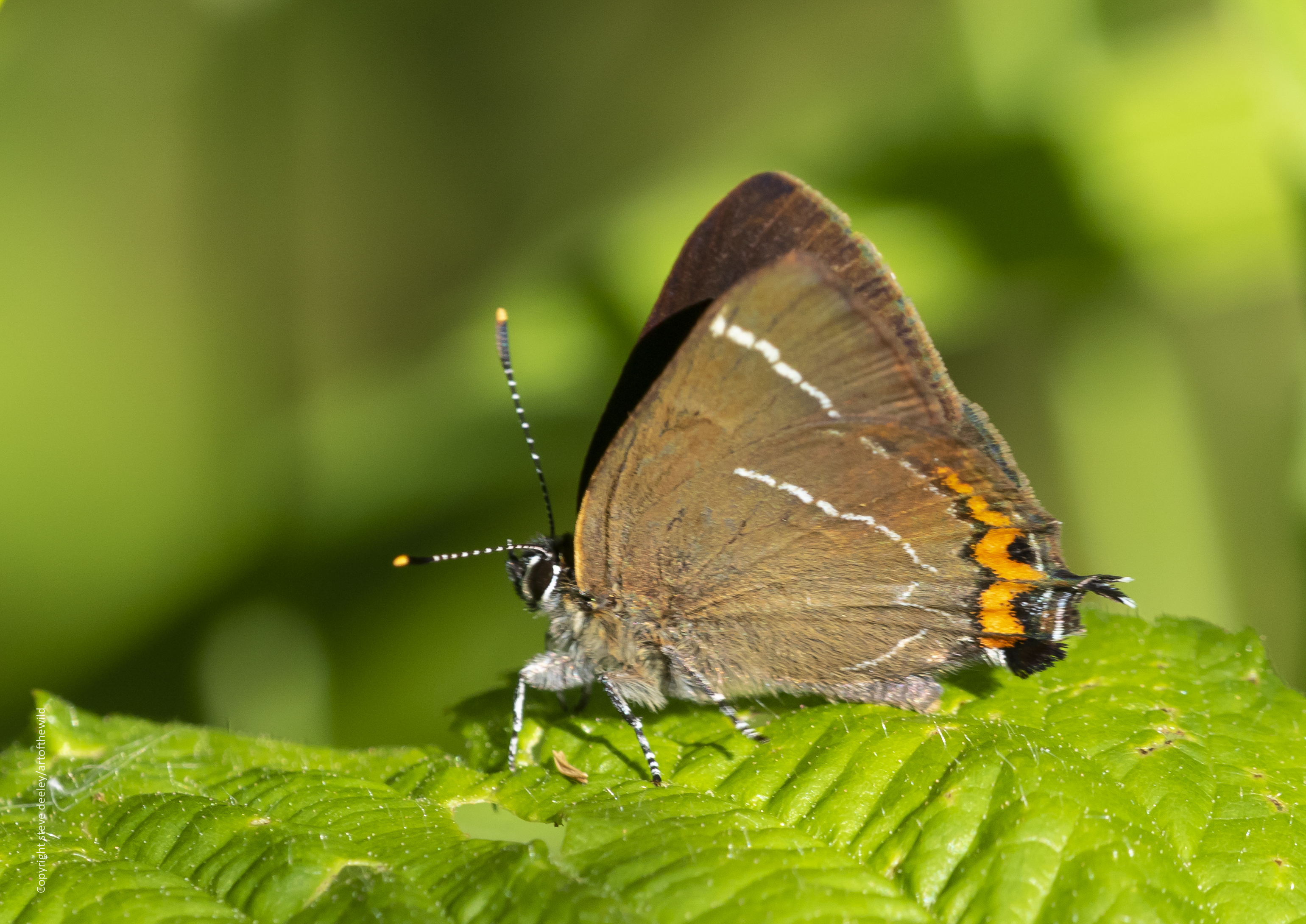
A few hundred yards further on, and something small fluttered down from the trees above me. It was a White-Letter Hairstreak, one of the butterflies I’d been looking for – not rare, but a priority species because it is an elm specialist and English elms were decimated by dutch elm disease in the 1980s. It starting drinking the faint dew on the grasses, indicating just how dry the weather had been.
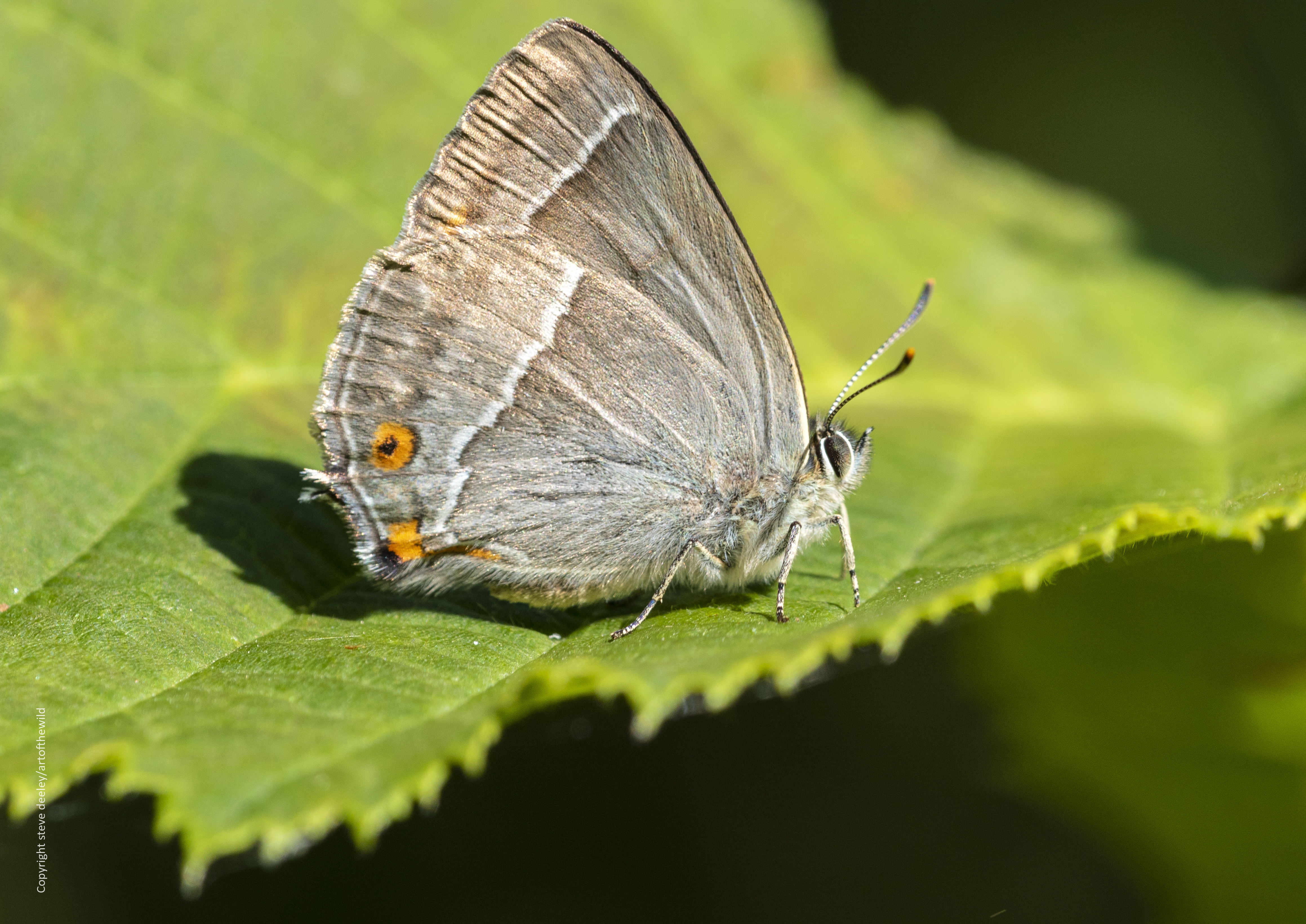
Moments later, it was joined by the Purple Hairstreak, another butterfly I’d been hunting for. This one is an Oak specialist – its scientific name is “Favonius Quercus” which roughly translates to “Oak lover”. It’s common, but prefers to fly a the tops of the trees and rarely descends low enough for people to see.
My run of luck continued – I saw a young fox cub, a Dark Green Fritillary, a white  admiral and a silver-washed Fritillary, all good butterflies to see.

I returned to the same woodland in the evening, hoping that perhaps the cooler evening air might entice  a few more butterflies down. None did, and at 6:30pm, I  walked back to the car park. Right where I’d seen the Roe Deer several hours earlier, a large bird flew across the path in front of me. It perched at the top of a nearby Ash and I felt my pulse race. For the first time in my life, I was looking at a wild Tawny Owl, a bird I have longed  to see for years. I was carry just my small closeup butterfly lens, so  took a quick snap, then walked slowly until I was out sight of the Owl before sprinting hell-for-leather for my car and the big telephoto lens I had there.

You know how it is when you’re desperate. I dropped the car keys. I couldn’t get the tripod set up. I nearly dropped the camera. Eventually, flushed and shaking, I sprinted back into the woodland carry my big lens just as fast as a tubby unfit bloke with dodgy knees can. The Owl had vanished. I started to put the camera down and head back to the car when I realised it was still there – it had just moved slightly. I brought the camera up, and the Owl stared straight down the lens. The sun was setting and the light was poor, so I adjusted settings and took picture after picture, hedging my bets. And just when I reached the point where I’d run out of ideas and  thought I’d try and get a little closer, the Owl flew off.

On Monday I’d driven hundreds of miles and ended up hot, tired and empty-handed. On Tuesday I drove five and had the best day’s wildlife encounters I’ve ever had. And that is why I do what I do.

Winners and losers

I spent today again looking for the Large Blue butterfly at a site in Gloucestershire. To my astonishment, I saw it not once or twice, but 22 times over the course of four hours. At one time I saw four in the air at the same time. It’s no scientific comparison, but last year on a similar visit, I saw just 2. A week ago, I was hunting for another rare butterfly, the Black Hairstreak. I expected to find a small number, perhaps 3 or 4, and found dozens

Black Hairstreak Butterfly

Black Hairstreak Butterfly

Yet at the start of the year, I struggled to find any butterflies at all. Common species you would expect see were absent, and talking to bird-ringers in local woodlands, both the numbers and weights of the small birds they were catching were down, suggesting that there was a significant shortage of insects. People are commenting widely on the late arrival and low numbers of swallows and other insect-eating migrants.

The only way I can explain this is that the unusually cold weather we had in early spring killed off a lot of the insects that were emerging at that time. This lowered the numbers of resident and migrant insect-eating birds, and probably meant that broods of  young were smaller too – so that later in the year, when he weather has been unusually warm, there have been more butterflies hatching and fewer predators to feed on them.

It’s just a  theory, but if it’s right and the good weather holds, we could see record numbers of butterflies this summer, which given the dire state of many British species, can only be welcome news.

Big Blue and the NASH meeing

The Large Blue is one Britain’s rarest butterflies. I’ve been fortunate enough to see it several times. But the Large Blue is a butterfly which, in sunny weather, always lands with its wings closed. And that’s a problem, because with its wings closed, the extremely rare Large Blue looks exactly like the very un-rare Common Blue butterfly, but  – well, larger. But some Common Blues can grow quite large and when the butterfly is in flight, it can be hard to tell them apart.

To be certain that you’ve found the Large Blue, you have to see it with open wings – the upper wing is dramatically different to the Common Blue. And the best way to achieve that is to find a good spot, where the butterfly food plants are plentiful, and then wait for it to show up.

This was the approached I followed successfully yesterday at a site in Gloucestershire where the Large Blue still clings on. But what I hadn’t counted on was that this year has been a very good year if you’re a Horsefly, and they were holding a NASH (that’s the National Association of Starving Horseflies) meeting . I’m allergic to Horseflies, and a single bite can be enough to make my hard/arm/leg swell up alarmingly. As a naturalist, I’m supposed to like all wildlife, even the ones that bite me, but I’m prepared to make an exception – a very big exception  – for Horseflies. I was sitting still, and an easy target, so they bit… and bit… and bit.

I got my picture, and a memorable encounter with this wonderful butterfly. And I’ll remember it for months, not just because the Large Blue is hard to find and photograph, but because that’s how long it will take for the bites to stop itching. Was it worth it? Clearly it was, because I went back again today for another go.


Powered by WordPress & Theme by Anders Norén