Naturalist. Nature writer. Nature photographer.

Category: Species loss

The long echo of the curlew

I hear it long before I see it. A high bubbling call, that loops up in pitch like a referee with one of those old-fashioned pea-whistles getting increasingly annoyed. It’s a song of desolation and loneliness, a haunting sound that I associate with moors and estuaries, with vast skies and open spaces. It’s the call of a curlew.

It makes me pause. Seventy years before, Blakehill Farm would have throbbed to the sound of wartime Dakotas taking to the skies. Now it’s a nature reserve, home in winter to short-eared owls, and in the summer to whinchat, yellowhammer, corn bunting, and the skylarks who even now englobe me in sound, warbling as they parachute slowly back down from an achingly bright sky into the waving sea of grass that surrounds me. But curlew is a new sound for me here. It calls again, and even the skylarks seem to pause to admire it.

Through the wobbly heat-haze I spot it, a hundred yard ahead of me. A pheasant-sized bird in mottled camouflage of cream and chocolate, with a long neck, and an absurdly long, gently curving bill, fully two-thirds of the length of its body, which is uses to probe soft ground for invertebrates. It walks unhurriedly, fading in and out of the long grass stems, probing the soil left and right, a hunting tiger. I am so astonished by the encounter that I don’t spot the second bird at first. The curlew population nationally has dropped 80% in fifty years, and I realise that I am now looking at twenty percent of North Wiltshire’s curlews, a breeding pair, a small hope for the future.

The curlew fade away in the haze as if I had imagined them, a metaphor for their species, but then I hear that call again. It sweeps out, over the expanse of grass and the unending sky, demanding to be heard. If nothing else, the curlew won’t go quietly into the night.
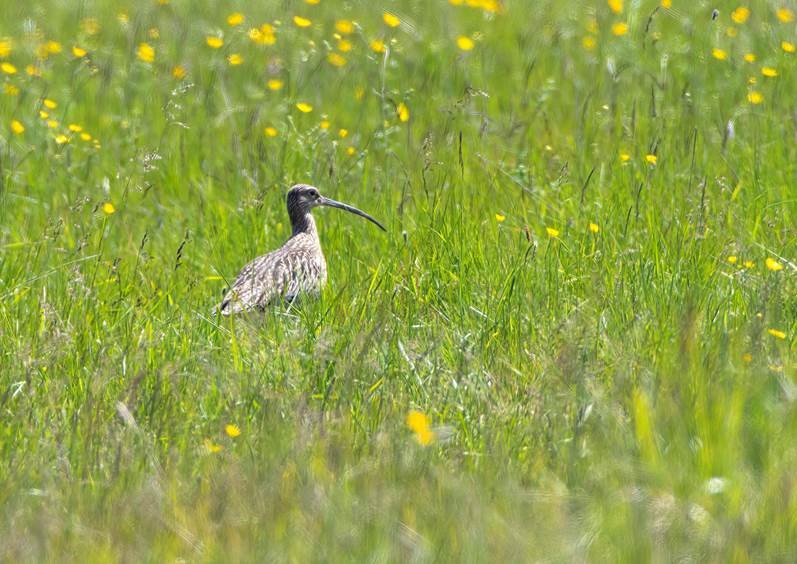
curlew
curlew

Armchair conservation

There’s a certain smugness involved when you can say that you’ve actively contributed to the recovery of a threatened species. Most conservation measures involve plain hard work – laying hedges, trimming encroaching bushes, digging out invasive plants. Mine involved finding a chair and a good book. It’s the easiest contribution to nature conservation I’ve ever made.

 There’s nothing like being stuck indoors much of the time to help you see the jobs you’ve been putting off for years. I’ve been busily focussed on removing 25-year-old wallpaper, and in consequence I’ve rather let my small garden go. I had always intended to do this, as a nod to the honeybee and the other animals and insects which welcome a touch of un-manicured wilderness, but it’s gone further than planned. Bindweed and brambles have taken hold beneath unpruned roses, and I appear to be growing dandelion as a cash crop. The wee mad Victorian in me wants to pull it all up and restore order, but there’s a growing beauty in its wildness, as the seed heads of unmown grasses start to resemble a field of barley in the breeze.

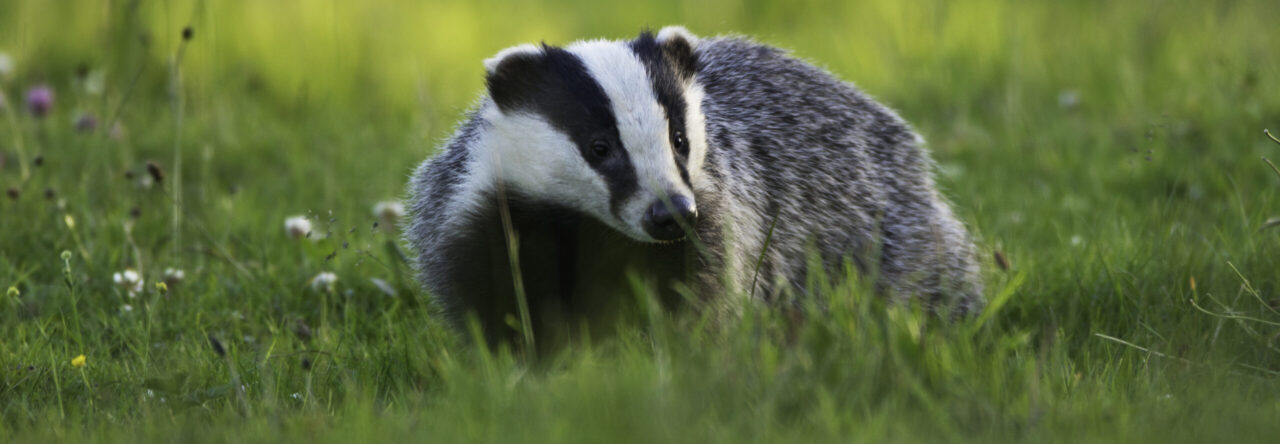
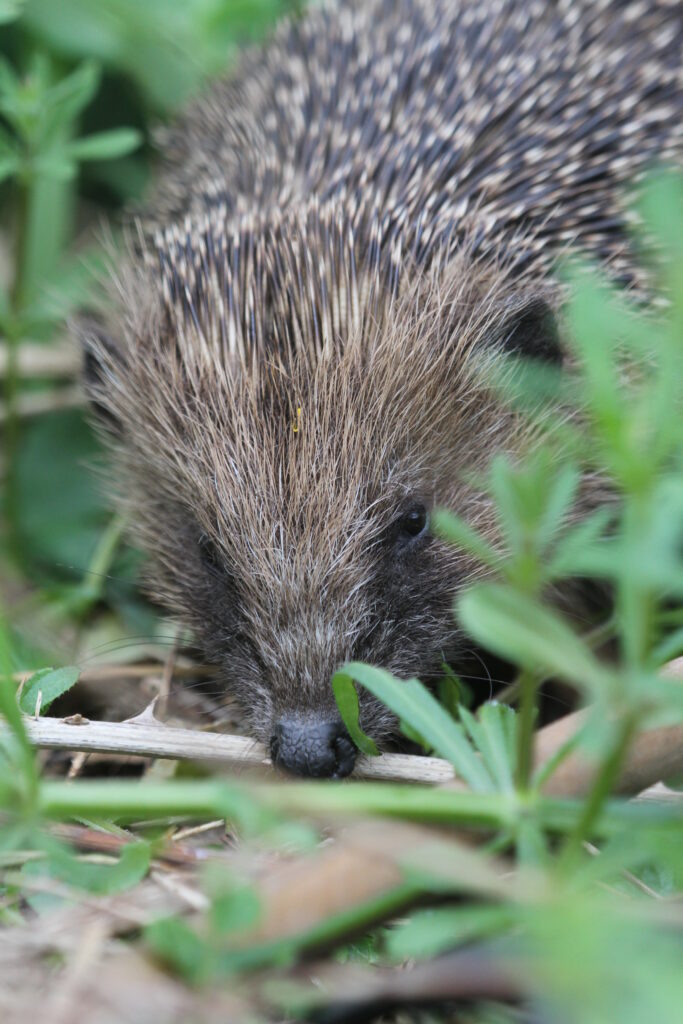
 Last night, I was woken by a sound like someone repeatedly whispering “work”.  I thought it was a cat, but wobbly torchlight revealed instead two hedgehogs circling each other. It’s the start of a mating dance that can (and did)  last several hours. The Germans have a delightful word for it:  an ‘igelkarussel’.  Hedgehog populations are in steep decline, and in July last year it was officially classed as vulnerable to extinction. It seems that my laziness has inadvertently given this pair exactly what they need: plentiful slugs and snails (we haven’t used slug pellets for years) and mounds of rotting vegetation to hibernate in over winter. Now somewhere in my garden, in just over a month, a desperately-needed batch of hoglets will be born.

 All of which means, of course, that I can’t start mowing now. Can anyone recommend a good book?


hedgehog

The hedgehog. Now, unbelievably, endangered


And the first shall be last

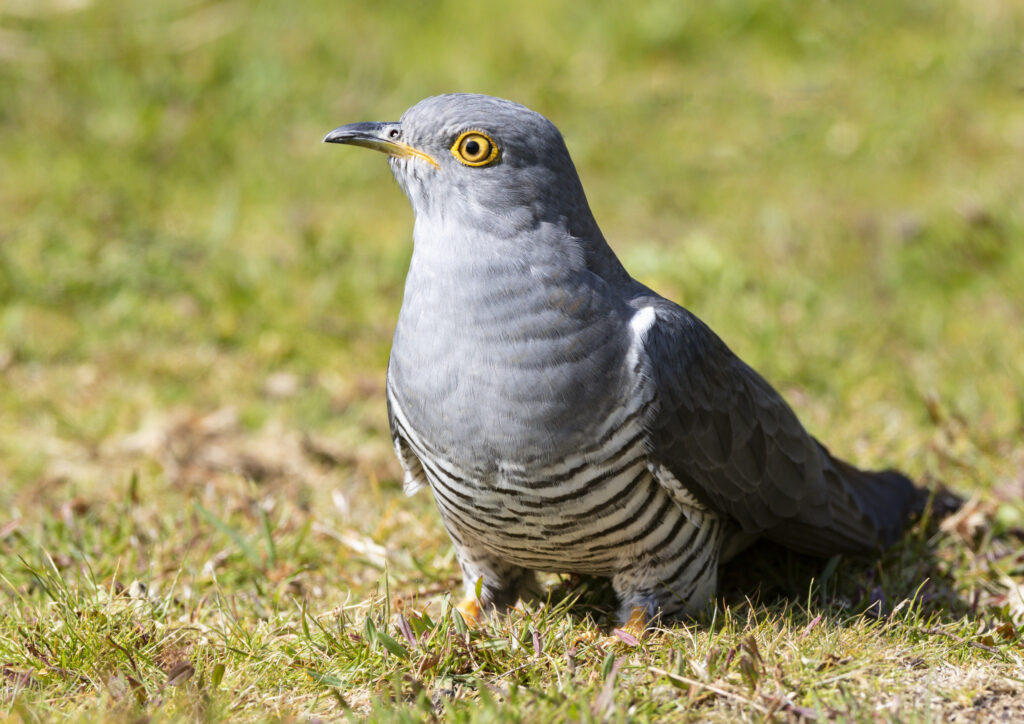
Yesterday, I heard a cuckoo for the first time this Spring. Which was hardly surprising, because it was sat about fifteen feet away from me at the time. This was no captive bird, however: this was a truly wild bird, newly arrived from Africa.

Colin, as he is known, is undoubtedly the UK’s most famous cuckoo. He has been arriving at the same site in Surrey for years. Estimates wary: some say he has been here for seven years, some say four. Either way, Colin is a methuselah, an old bird in cuckoo terms who is still flying the four thousand miles from the Ivory coast in sub-Saharan Africa, back to Surrey each year to woo the ladies. He is, if I may say so, looking particularly fine for a bird that must be absolutely knackerred.  Colin has become a firm favourite because he willingly trades up close encounters for offerings of live mealworms that his army of fans are all too willing to provide. Like a movie start of old, Colin preens and poses for the camera, before guzzling down so many mealworms that it’s hard to see how he gets into the air again. He then heads off to a distant tract of woodland to start calling to the ladies.

We don’t know if Colin is successful. He’s never been seen in the company of a female, and certainly never brought one back to face the cameras. Perhaps he is simply too old for all that now, or perhaps like many celebrities he doesn’t want his private life papped.  If he isn’t breeding, that would be a tragedy, because we need all the cuckoos we can get. When I was a child, the call of the cuckoo would be heard regularly, but numbers have dropped by half in just the last 20 years. The reasons aren’t clear, but the impact of climate change on their crossing of the Sahara is one likely culprit. Cuckoos come here to breed, so inevitably the decline in  numbers here is a decline in the numbers who are breeding. In fact, the Cuckoo only says “cuckoo” here: it is a mating call and not something the cuckoo says when overwintering down in Africa.  Colin is the first cuckoo I have heard this year and given his age, this may be the last time I hear him. The tragedy is that there may soon come a time when the call of the cuckoo is something that our children will never hear at all.

Colin the Cuckoo

Colin the Cuckoo

Powered by WordPress & Theme by Anders Norén