Naturalist. Nature writer. Nature photographer.

Month: May 2019

and here’s another thing

One of the joys the study of the natural world brings is that there’s always a new fact waiting to be learned. I thought a knew quite a lot about the large blue butterfly. I knew that it was extinct in the UK. I know that it was reintroduced. I know that its caterpillars rely on a specific species of myrnica red ant, which take the caterpillar into their nest and feed it. They do so because  the caterpillar mimics the pheromones of ant grubs and (and this is the bit that blows my mind) sings the songs that the red ant grubs sing. Yes, really. I knew that the caterpillar doesn’t just mimic any old ant grub, but a queen ant grub.

But I recently met a man who was involved in the project to reintroduce the butterfly. He’s actually witnessed the large blue caterpillars being picked up and taken into the red ant nests, and he told me that when it wants to be picked up by the ants, the caterpillar also changes shape, rearing up and mimicking the body shape of the ant.

Large Blue Butterfly

Large Blue Butterfly

Every time I think I can’t be more astonished, I found out something new. This world is so special. If we lose our wildlife, as we are undoubtedly doing, we don’t just lose a pretty butterfly or a small ant. We lose the complexities and interactions and sheer wonder that millions of years of evolution can create. We lose the ideas and the chemicals and the antibiotics and all the other solutions that nature has worked out to the various problems of living. And one day, we may be badly in need of them.
Colin and identity theft

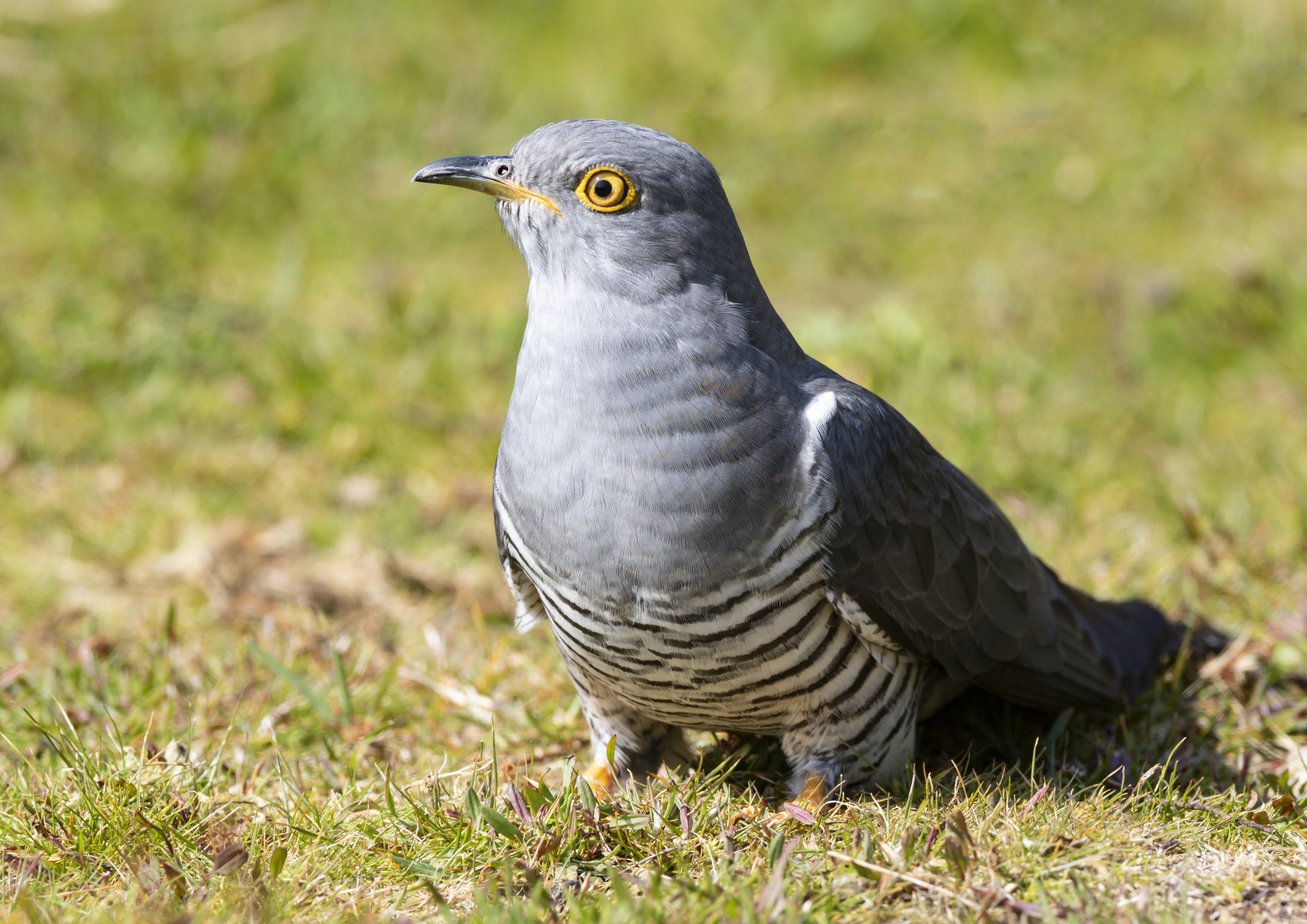
This is Colin. He is probably the UK’s (and perhaps the world’s) most famous Cuckoo. He lives on Thursely Common, in Surrey. But only some of the time

Colin the Cuckoo

Colin the Cuckoo

Cuckoos like to travel. With enviable commonsense, Cuckoos spend the British winter far from our shores, in Central Africa, where they pass the time eating. Interestingly, one thing they don’t do in Africa, is say “Cuckoo”. The call so familiar to us as a harbinger of Spring  is a mating call, and is only ever made here in the UK where the birds breed.  Colin is a bird who has become more used to humans than most. He is still a completely wild Cuckoo, and every autumn he sets off back down to Africa. But for the last few years he has grown to tolerate photographers who now gather in large numbers in a large green field in Thursley common, an otherwise fairly bleak expanse of  rather boggy heather moorland.  His affection may have something to do wit the ready supply of mealworms that are now left out for him. Sadly, the many photographers present break the rules on bait feeding (don’t do it regularly, don’t over-feed, don’t make the wildlife dependent on it), so Colin is able to spend less time foraging for food than other Cuckoos and more time concentrating on the one thing that really motivates him: sex. “Cuckoo” is a mating call, designed to drive the ladies into a frenzy, and as I’m sure you will agree, he’s a rather handsome chap. So much so that I can almost forgive the fact that Colin, like every cuckoo, started his life deceiving his unwitting foster parents that this enormous chick in their nest was actually one of theirs. Female cuckoos can actually change the colour and patterning of their eggs to suit the nest of the host species that they are using. Identity theft? Cuckoos thought of it first, and they’ve been doing it longer and better than humans ever could.


Who names these things?

I recently went in search of a creature I’ve never seen before, with the delightful name of the “Grizzled Skipper”. To me, that conjures up images of Captain Birdseye, or maybe Captain Barbarosa in the Pirates of the Caribbean films. But no,the “Grizzled Skipper” is actually a small, dark-grey-to-black butterfly.

grizzled skipper butterfly

grizzled skipper butterfly

Now this butterfly is one of a family of Skippers, and it has a fairly rough-and-ready look, so I suppose that “Grizzled Skipper” could make sense in some ways, but it’s a tiny little thing, barely bigger than my thumbnail. It looks delicate enough to blow away in a light breeze. So here’s my plea to the people who name these things: can we at last get a name that makes you think of what you’re looking at?

Powered by WordPress & Theme by Anders Norén