Naturalist. Nature writer. Nature photographer.

Month: July 2021

It’s the small details that matter

I fulfilled a small ambition yesterday.

I have for some time tried to find and photograph the Brilliant Emerald dragonfly. It ‘s a Ronseal insect, doing exactly what it says on the tin: it is brilliantly emerald. So, since the weather has finally graced us with something other than rain, I thought I’d give it another go. It’s an acid pool lover, so if you want to see it your options are limited to Scotland, or to a cluster of small colonies in the heathlands of the southeast.  Having tried Warren Heath, the nearest location to my home,  last year, this time I went to the Basingstoke canal. It’s unusual for a canal to be both placid and acidic, but the Basingstoke canal between Aldershot and Farnham is exactly that – very slightly tea-coloured, and peaceful and serene in the gaps between the whining, thundering roars of aircraft taking off from nearby Farnborough Airport.

I have never seen so many fish in a canal, including at one point a foot-long young pike who look spoiled for choice in  the meals department. I kept looking for kingfisher, but like so many canals, this section lacked the high muddy banks that the birds need to nest in, and there was not some much of a tweet of one – much to the relief, I expect, of the local anglers.

I saw the Brilliant Emerald with moments of arriving, out over the water, a jewel hanging from glittering golden wings. It’s one of those species, like the Kingfisher,  that makes you wonder about evolution. Bar strapping an anti-collision light to it, you couldn’t make it more obvious, and I was suddenly grateful for the relative lack of birdsong along the canal sides, because I expect they would takes these beautiful insects at once. Or maybe it’s a double-bluff: many brilliantly-coloured insects are that way to act as warning that they are toxic or poisonous. Perhaps the BE is bluffing  and hoping that such an obviously bright dragonfly will be left alone.
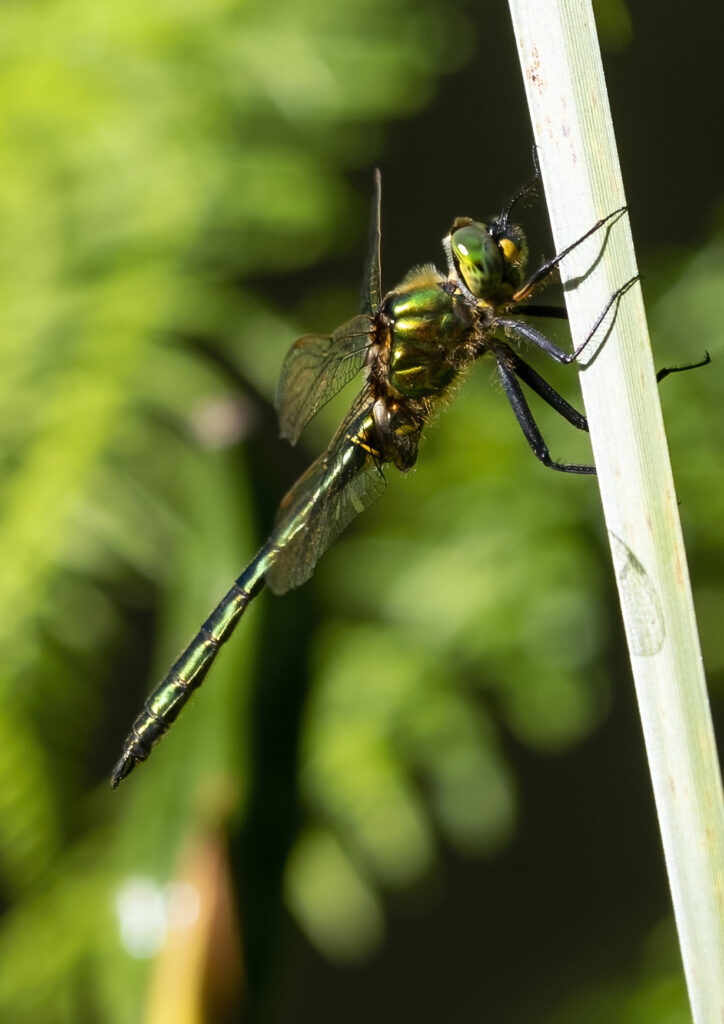
 

brilliant emerald dragonfly

Either way, here it is: a male Brilliant Emerald dragonfly pausing for breath, the result of three years of effort for me.  Was it worth it? Oh yes.
The long echo of the curlew

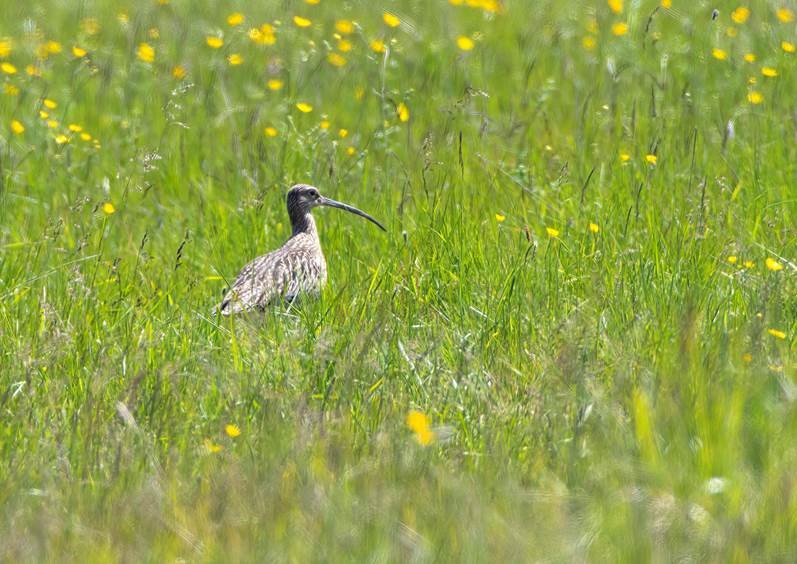
I hear it long before I see it. A high bubbling call, that loops up in pitch like a referee with one of those old-fashioned pea-whistles getting increasingly annoyed. It’s a song of desolation and loneliness, a haunting sound that I associate with moors and estuaries, with vast skies and open spaces. It’s the call of a curlew.

It makes me pause. Seventy years before, Blakehill Farm would have throbbed to the sound of wartime Dakotas taking to the skies. Now it’s a nature reserve, home in winter to short-eared owls, and in the summer to whinchat, yellowhammer, corn bunting, and the skylarks who even now englobe me in sound, warbling as they parachute slowly back down from an achingly bright sky into the waving sea of grass that surrounds me. But curlew is a new sound for me here. It calls again, and even the skylarks seem to pause to admire it.

Through the wobbly heat-haze I spot it, a hundred yard ahead of me. A pheasant-sized bird in mottled camouflage of cream and chocolate, with a long neck, and an absurdly long, gently curving bill, fully two-thirds of the length of its body, which is uses to probe soft ground for invertebrates. It walks unhurriedly, fading in and out of the long grass stems, probing the soil left and right, a hunting tiger. I am so astonished by the encounter that I don’t spot the second bird at first. The curlew population nationally has dropped 80% in fifty years, and I realise that I am now looking at twenty percent of North Wiltshire’s curlews, a breeding pair, a small hope for the future.

The curlew fade away in the haze as if I had imagined them, a metaphor for their species, but then I hear that call again. It sweeps out, over the expanse of grass and the unending sky, demanding to be heard. If nothing else, the curlew won’t go quietly into the night.

curlew
curlew

Hot sex in a Gloucestershire woodland

The glade smells of baking ground and dried bracken, cut with the faint sweetness of end-of-year-sale bluebells. Their last few nodding heads are just visible between the unfurling green shepherd’s crooks of new ferns, and the squat purple flowers of bugle. Spindly birches cast ripples of dappled shade across the ground, but in this glade, surrounded on all sides by taller, more mature forest, the heat of this beautifully sunny day is trapped. It is uncomfortably warm.

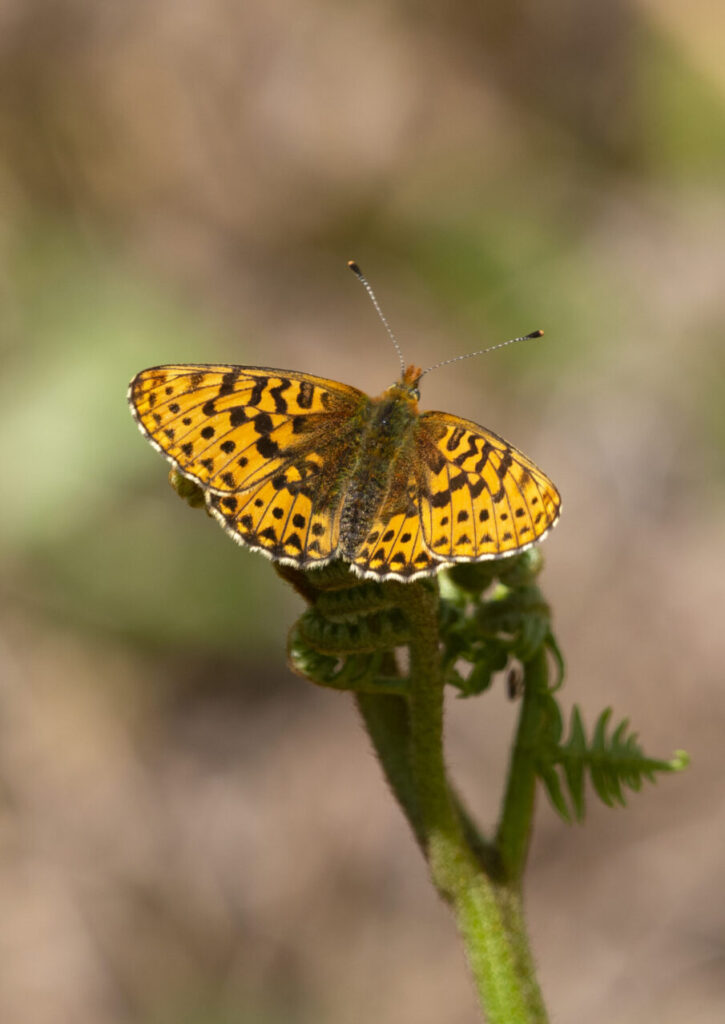
 As I stand and watch, sweat beading on my forehead, I finally spot the movement I have been looking for. It is a butterfly, flying low to the ground, moving unpredictably from spot to spot like a pinball in play. In flight it looks orange, but occasionally it pauses, wings still fluttering, and I can glimpse a spattering of dark brown markings on its upper wings, as if someone has flicked a paintbrush at it. It’s one of our most endangered butterflies, although that is a strongly competed title these days. It’s named after the silver-white patches on its underwings which gleam like pearls when caught in the right light:  the pearl-bordered fritillary.

 I turn, and see butterfly after butterfly, all in constant motion. Occasionally, just occasionally, one will stop for a few seconds at a bugle flower to fuel up, like a motorway driver grabbing a quick latte, before taking to the air again. It’s a peaceful, bucolic scene, except that it has a darker undertone: every butterfly I can see is male, and their flight is not random. They are following invisible pheromone trails and will investigate anything – a dried bramble leaf gets particular attention – that is the right shade of orange. Such is the competition here that the males hatch first, then spend their time desperately seeking newly hatched females that they can mate with before the female’s wings are dried out and she can fly away.  I am witness to an orgy.

 In the end the heat is too much, and I move to cooler, shadier woodland nearby. The relentless, desperate males fly on.

pearl-bordered fritillary

pearl-bordered fritillary

The smell of a wet day


Finally, the smell has arrived.

You know the moment, when you stand on your doorstep in the morning and breathe in, then breathe in a little further because the air smells so good.  There’s something about a sunny morning after a long period of rain that makes the world seem full of promise, more hopeful somehow than the damp night before. And it’s not just imaginary. It turns out that you’re being turned on.

In the soil around me, Streptomyces bacteria are busy. These bacteria act like fungi, producing networks of filaments that spread through the soil. Untold billions of them produce a chemical, Geosimn (literally, ‘the smell of the earth’) that is the smell we associate with associate with wet ground. The morning sun lofts this chemical into the air, and voilà, the perfect start to a day.

Surprisingly, that smell also depends on springtails, tiny 6mm-long micro-beasts who live in the soil. They are not insects but hexapods, a different branch of the tree of life, and they have a distinct fondness for Geosimn because they eat Streptomyces bacteria. Streptomyces bacteria also like springtails, because their spores stick to the springtail’s otherwise remarkably non-stick surface, and are carried by them throughout the soil, taking the bacteria to fresh new feeding grounds.

The dew has turned my shaggy, uncut lawn into a field of diamonds, and curl of hot coffee vapour rises from the cup in front of me. The sun is warm on my face, the wren in the next-door hedge is singing his heart out, and up on the garage wall a dozen feet away, the bluetits are in-and-out, in-and-out of the nest box I put up, feeing a growing batch of chicks that I can hear twittering faintly. I raise my cup in salute – to springtails, to Streptomyces, and to the summer that has finally, perhaps, arrived. 

Armchair conservation

There’s a certain smugness involved when you can say that you’ve actively contributed to the recovery of a threatened species. Most conservation measures involve plain hard work – laying hedges, trimming encroaching bushes, digging out invasive plants. Mine involved finding a chair and a good book. It’s the easiest contribution to nature conservation I’ve ever made.

 There’s nothing like being stuck indoors much of the time to help you see the jobs you’ve been putting off for years. I’ve been busily focussed on removing 25-year-old wallpaper, and in consequence I’ve rather let my small garden go. I had always intended to do this, as a nod to the honeybee and the other animals and insects which welcome a touch of un-manicured wilderness, but it’s gone further than planned. Bindweed and brambles have taken hold beneath unpruned roses, and I appear to be growing dandelion as a cash crop. The wee mad Victorian in me wants to pull it all up and restore order, but there’s a growing beauty in its wildness, as the seed heads of unmown grasses start to resemble a field of barley in the breeze.

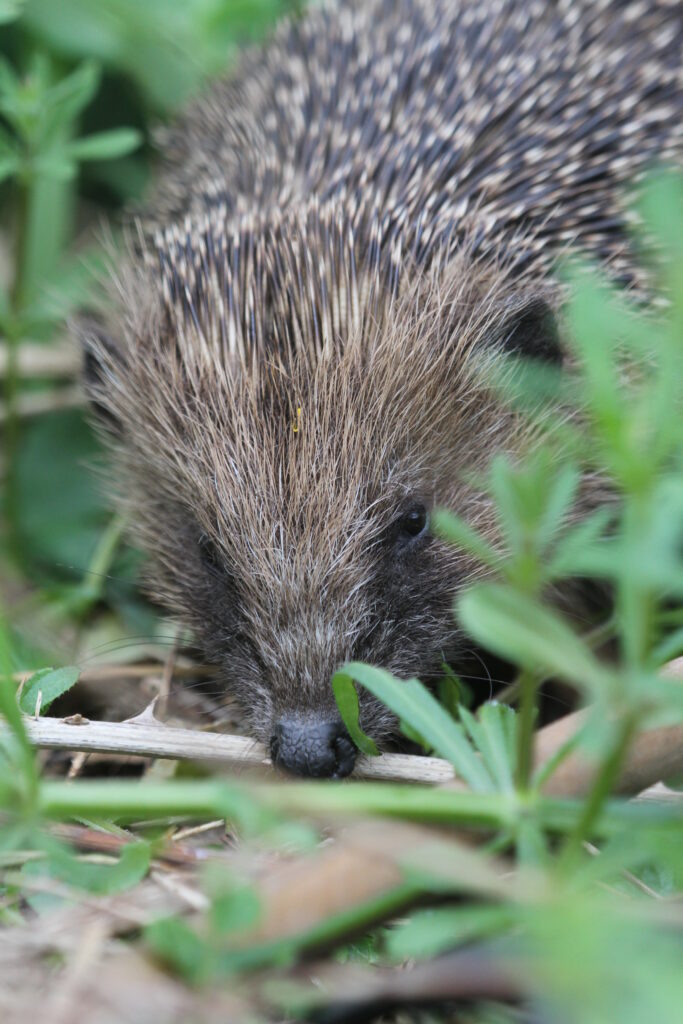
 Last night, I was woken by a sound like someone repeatedly whispering “work”.  I thought it was a cat, but wobbly torchlight revealed instead two hedgehogs circling each other. It’s the start of a mating dance that can (and did)  last several hours. The Germans have a delightful word for it:  an ‘igelkarussel’.  Hedgehog populations are in steep decline, and in July last year it was officially classed as vulnerable to extinction. It seems that my laziness has inadvertently given this pair exactly what they need: plentiful slugs and snails (we haven’t used slug pellets for years) and mounds of rotting vegetation to hibernate in over winter. Now somewhere in my garden, in just over a month, a desperately-needed batch of hoglets will be born.

 All of which means, of course, that I can’t start mowing now. Can anyone recommend a good book?


hedgehog

The hedgehog. Now, unbelievably, endangered


Powered by WordPress & Theme by Anders Norén