Naturalist. Nature writer. Nature photographer.

Category: Uncategorised Page 5 of 6

The Owl and the pussycat

I have a very cute cat. In fact, I have two. They are adorable, cuddly grey tabbies. They are extremely placid – you pick them up, turn them upside-down and tickle their tummies. And one of them is raving psychopath. Despite being extremely well fed, Bramble goes out into the neighbourhood and delivers a steady stream of dead and dying wildlife to my feet. When I’m not chasing traumatised mice around the bedroom, I’m impressed by just how efficient a predator he is. He spends 80 percent of his life asleep, 19.99% begging for food, stealing food and trying to steal food, and 0.001% being utterly lethal to small mammals. I saw him outside the other evening and realised that in the dark, my tabby just disappears. His random stripes break up his outline, and make it exceptionally hard to see him, except when, as in this case, he’s sat under a streetlight.

I was struck by the similarities while looking for Short-eared Owls recently. We have a pair flying around Barbury Castle in Wiltshire at the moment, and I cajoled my wife into coming to see them with me. I told her how rare they are, what excellent fliers they are, what a privilege they are to see. Except we didn’t. After two hours in which we saw exactly no owls, we went home. So I was surprised when my wife again agreed to join me owl-hunting again the following evening. After another hour of nothing, we were on the verge of going home when the owls finally turned up. They are large birds, perhaps the size of a chubby seagull, with the same flat faces that Barn Owls have – as if their fronts have been sawn off. And just like my cat, they have a wonderful set of tabby stripes running their length. That’s a rather curious thing until you know a little more about these magnificent birds

Short-eared Owl, Barbury Castle

Short-eared Owl, Barbury Castle

Barn Owls have the same flat faces as Short-eared Owls, and for the same reason. Both species hunt voles. The flat face acts like a parabolic reflector, channelling the faintest of  sounds of scuttling vole towards their ears. Like the barn Owl, this gives Shorties excellent hearing. But unlike Barn Owls, Shorties have huge yellow eyes. Why?  The answer is that like the Little Owl, these owls often fly in daylight.  They are “crepuscular”  hunters, hunting mainly in that wonderful  time of half-light just before and after the sun sets or rise. It’s very much a  time for specialists. Vision-led hunters like Kestrels struggle as the light is dim and the landscape is overlaid with long shadows. Sound-led hunters like the Barn Owl struggle with the wind that blows around sunrise and sunset, and the noise of human traffic. But the Shortie, combining the best of both worlds, manages just fine.

But there’s another oddity. The Night-flying Barn Owl is an ivory – white colour. But just as with Bramble, the Shorties these stripes serve as camouflage. So why does an Owl need camouflage? The answer is not to allow it to hunt, but to stop it being hunted itself. Shorties nest, and often roost, on the ground. They love a patch with tussocks of long grass whose tops have dried – which is exactly what their superb camouflage lens into. So here is an Owl that flies during the day, sleeps on the ground, and has the keen eyes of a Peregrine married with the keen ears of a Barn Owl. And while they are ferocious and successful predators;  just like my cat Bramble, I think they are rather cute.
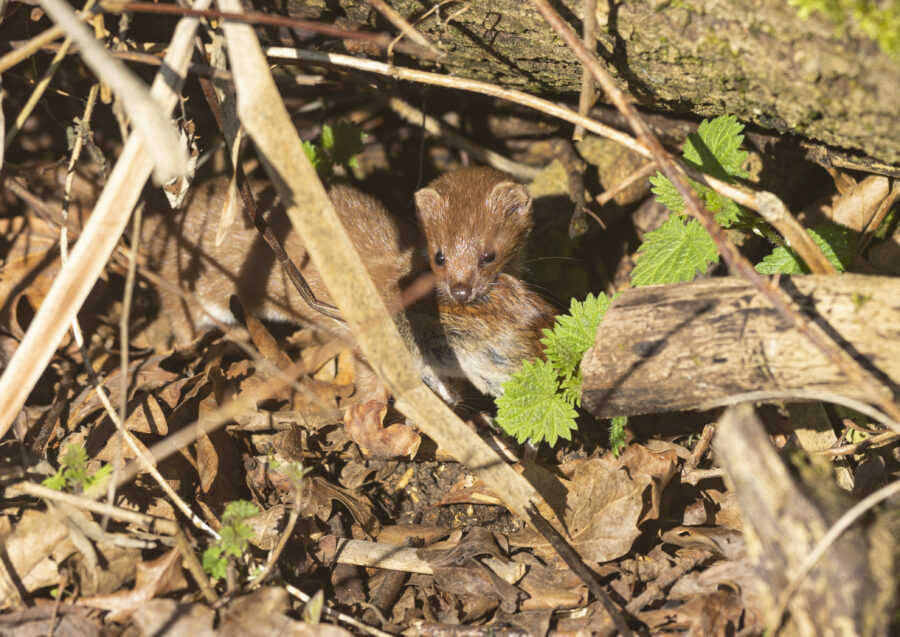
weasel with vole

A lesson in humility

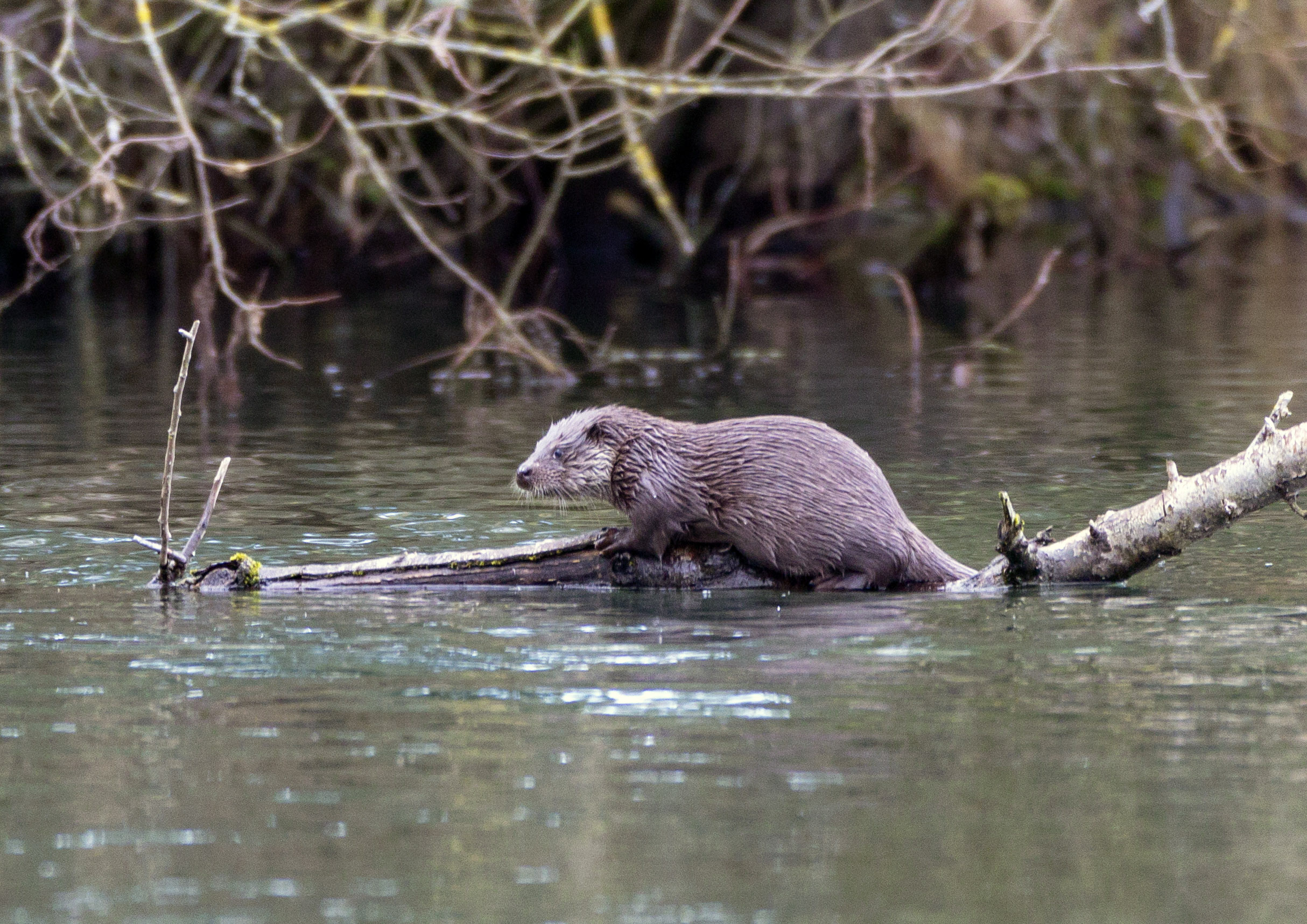
This morning, I actually went” Oh, it’s just an otter”. I’d photographed a female riverine otter, in the wild, but it was foggy out and the photo wasn’t much good.

But then I realised what I’d said. Ten years ago, I would have sawn both my arms off to even see an otter. Now it was so commonplace that I actually dismissed it.

It tuns out that I’m addicted to wildlife. Much like drug addiction, I keep needing a bigger high. A closer view. A more scarce species. The same attitude, I realised leads me to show contempt to pigeons. When you get right down to it, pigeons are beautiful birds. If they were rare, people would rave over them. It’s only because you are absolutely guaranteed to see one virtually every day that leads us to not care about them. There is an irony here, which is that the Giant Panda, for so long the icon of wildlife conservation, is no longer endangered thanks to industrial-scale artificial insemination in China – yet many species we think of as common are disappearing fast. How long will it be, I wonder, before people speak wistfully of seeing a starling?

I got my comeuppance. The otter vanished and stayed away all day. And as I watched a bank vole (“Horace2”) I’ve come to know quite well, I got a signal lesson that you should never take things for granted, as Horace2 was swiftly caught and killed by a Weasel. So I finally got a glimpse of a hard-to-see animal, and rather wished I hadn’t.

A Blue Day

There are around 60 butterfly species in the UK, and seeing them all is a project in itself. I’ve met two people who have done it all – one couple still happily married having finally achieved it together, and one man now divorced having spent 3 years and £3,000 doing it. So I decided to set myself a more achievable goal, in the hope of staying sane and married and solvent, hopefully all at the same time. I would see every blue butterfly in the UK.

Why Blue? I hear you ask (Spooky, isn’t it, that I can read your mind?).

Largely because they very pretty, and also because I live close to area where you can see many of them.

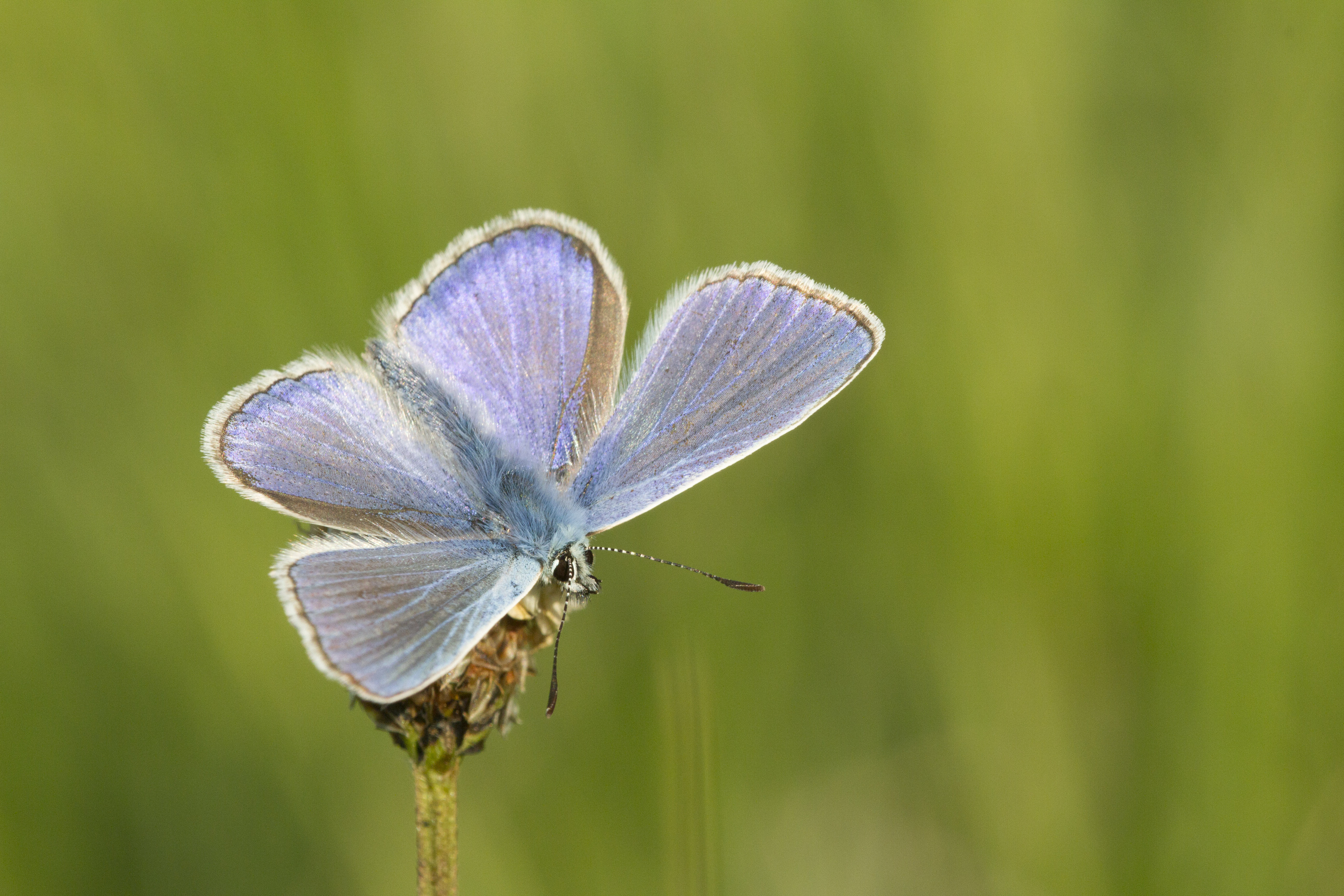
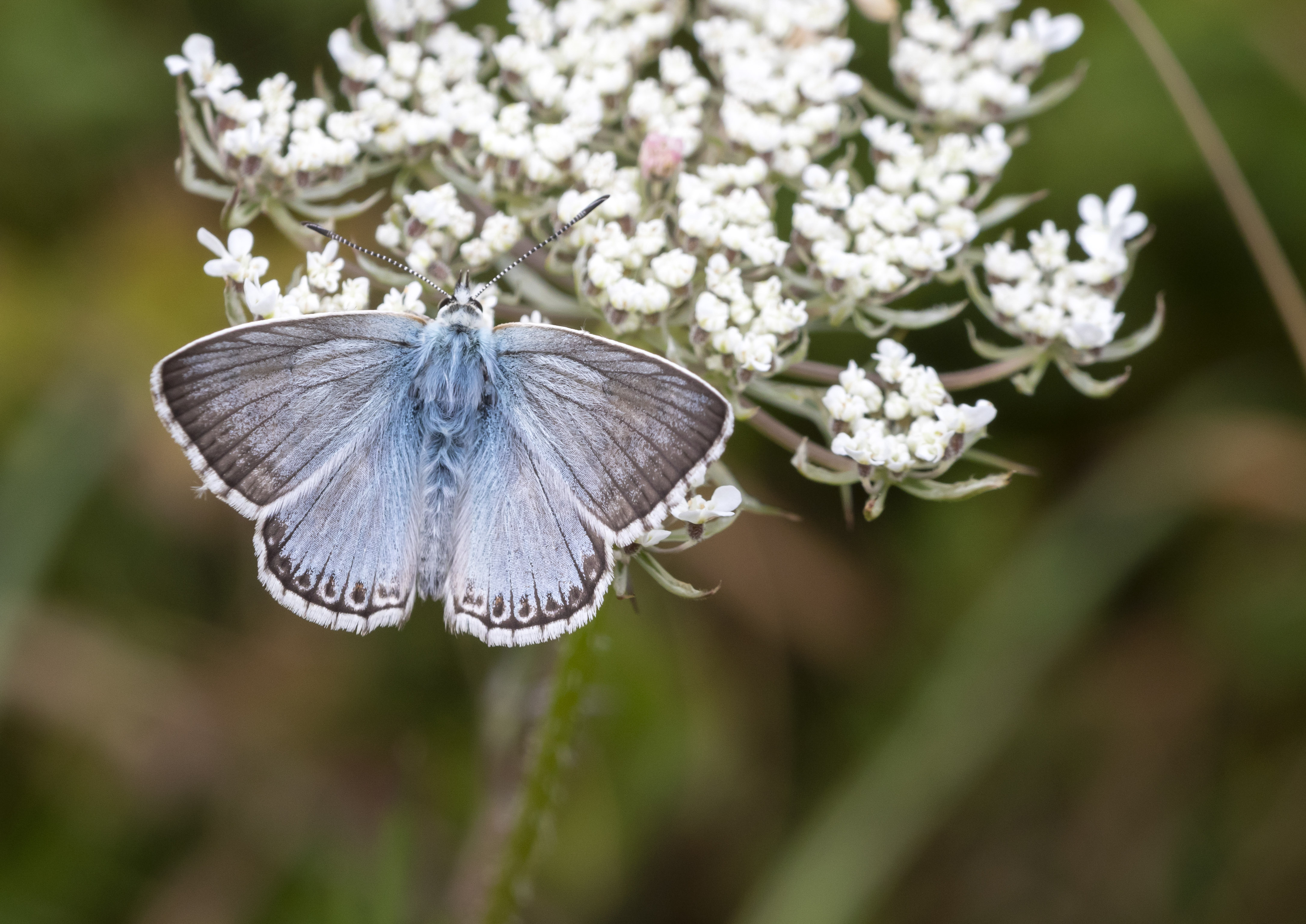
Well, on 21st July 2018, I did it. My third, slightly desperate visit to Barbury Castle, in Wiltshire, on a robustly windy day yielded the Chalkhill Blue. Now I disapprove of “collecting” nature, as if living things were stamps or steam engines, but I’ll admit that there is a certain contentment (or maybe smugness) in having seen all of something. In my case it’s tinged with sadness, knowing that there’s a good chance my grandchildren will never be able to repeat my feat. At the speed at which many of our butterflies are declining, they may be lucky to see many at all. So feast your eyes on the beautiful blues. While you still can

Large Blue Butterfly

Large Blue Butterfly

Common Blue

Common Blue

Chalkhill blue

Chalkhill blue

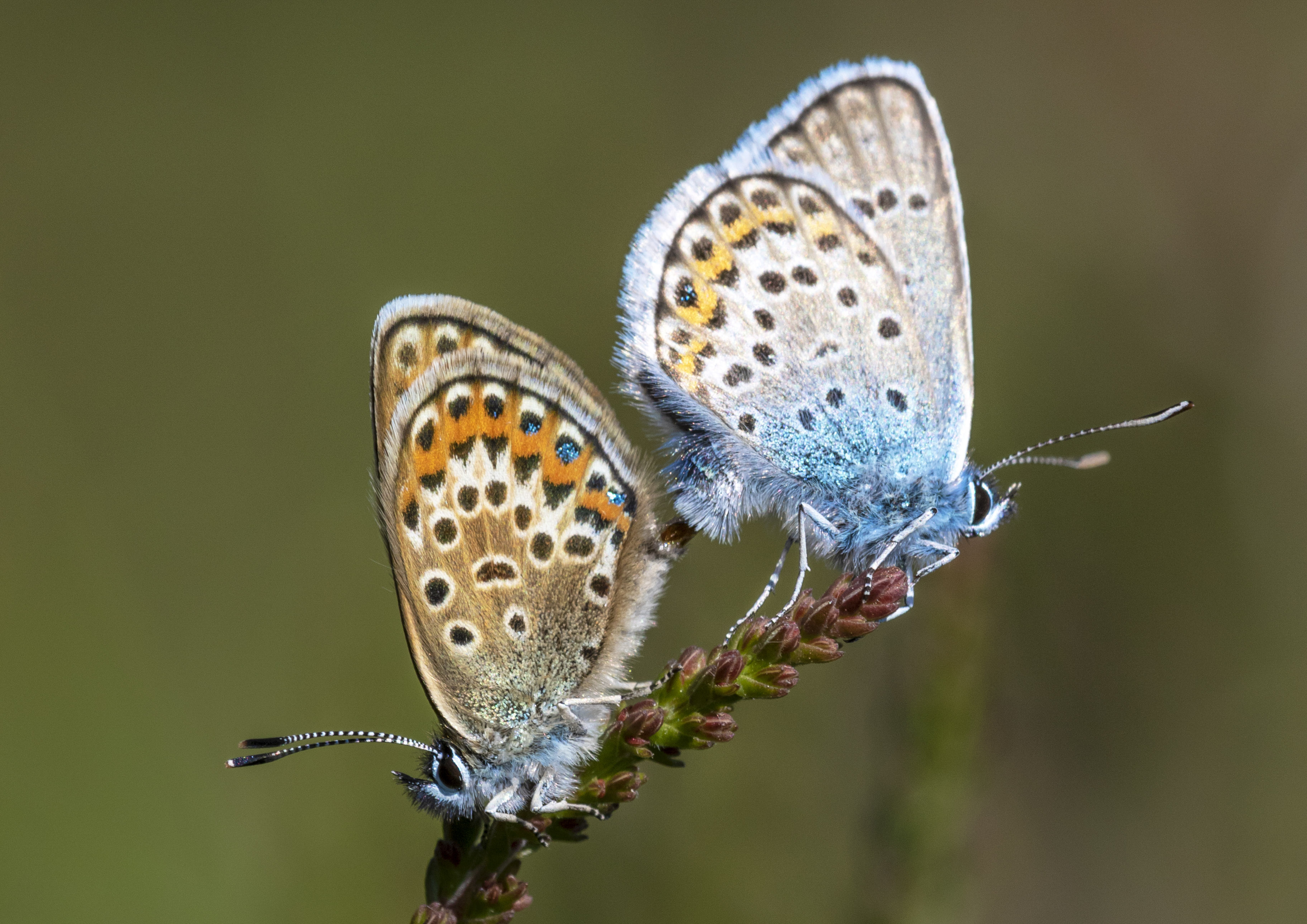
Silver-studded Blue

Silver-studded Blue

Small blue

Small blue

Holly blue

Holly blue

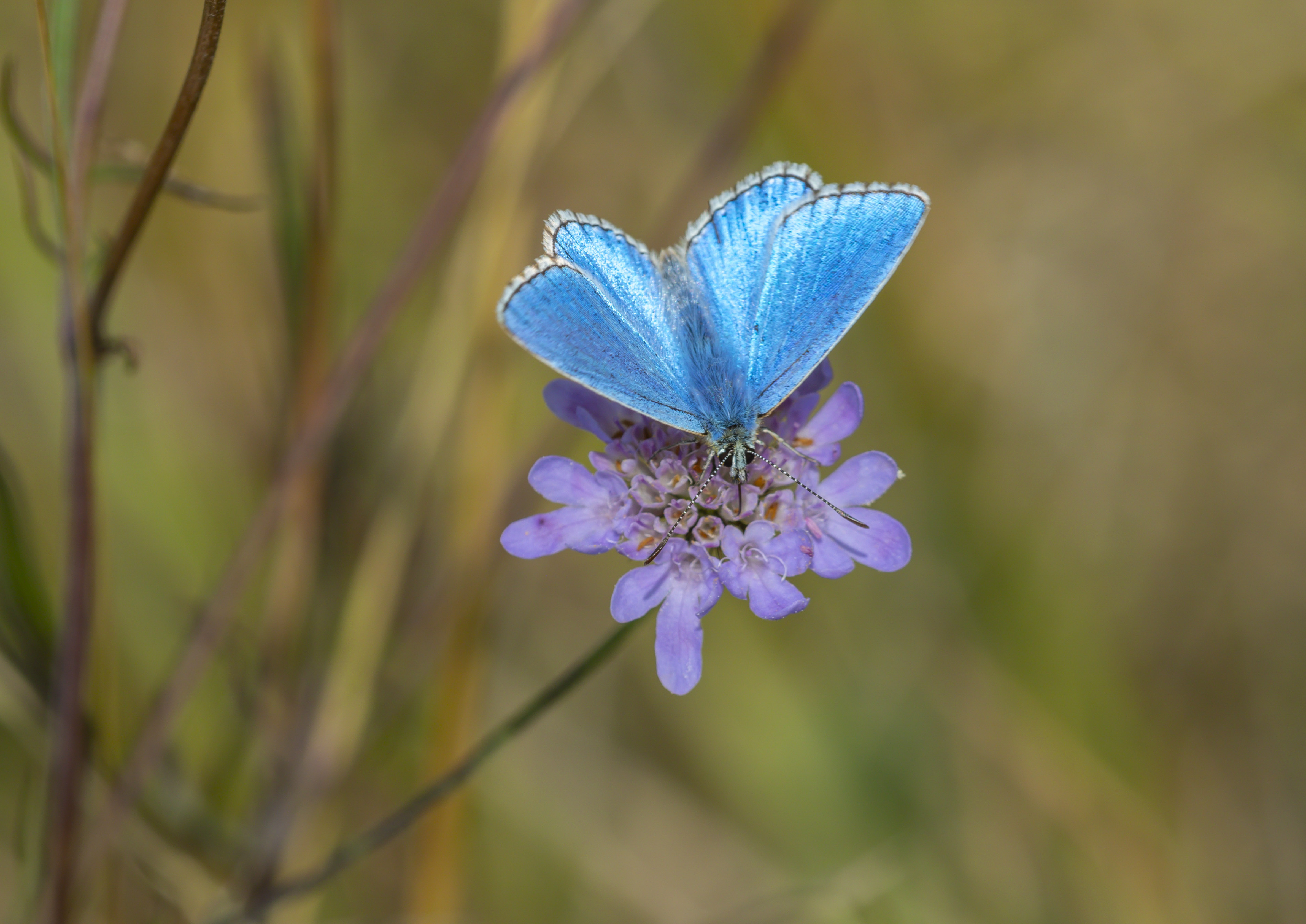
Adonis Blue

Adonis Blue

When will I learn?

This morning I got up at 05:45 am to look for the mother otter and her kitts. I’d seen them recently, and as the forecast looked promising I was hopeful I might get some shots in better light.

Now this is the same place where, 4 years ago, I left my camera in a hide while I nipped to the loo. And when I got halfway there I stumbled across a mother otter and her kitts on the path.

This time i found the otter and kitts fishing right beside it, in and around the branches of a fallen tree. The branches stopped me taking photos so I waited patiently for them to emerge onto open water where I could take a picture. The light was perfect. Then everything went silent and still. Had they gone from the tree out into the lake? Had I missed them? I stepped three paces to my right to get a clear view of the lake. And as I did so, the mother otter and her kitts swam right past me, no more than twelve feet away. If I moved they would dive and I would not see them again. So i had to stand there, immobile, watching as the shot of my dreams slowly swam away, the female watching me closely and sniffing repeatedly. Otters have a very good sense of smell and I got the impression I was being filed away somewhere in her list of things to watch out for.

I went home, almost in tears, but returned to the reserve that afternoon. For hour after hour I saw nothing. But just as I was about to go home, I saw the mother otter and kitts appear as if by magic. The light was fading but it was a joy to watch them playing. At one point one of the kitts climbed onto its mothers back just as she was diving, and I finally got a photo. But even if I hadn’t got anything, an early start and a long day would have been a small price to pay.

What the Government isn’t telling you

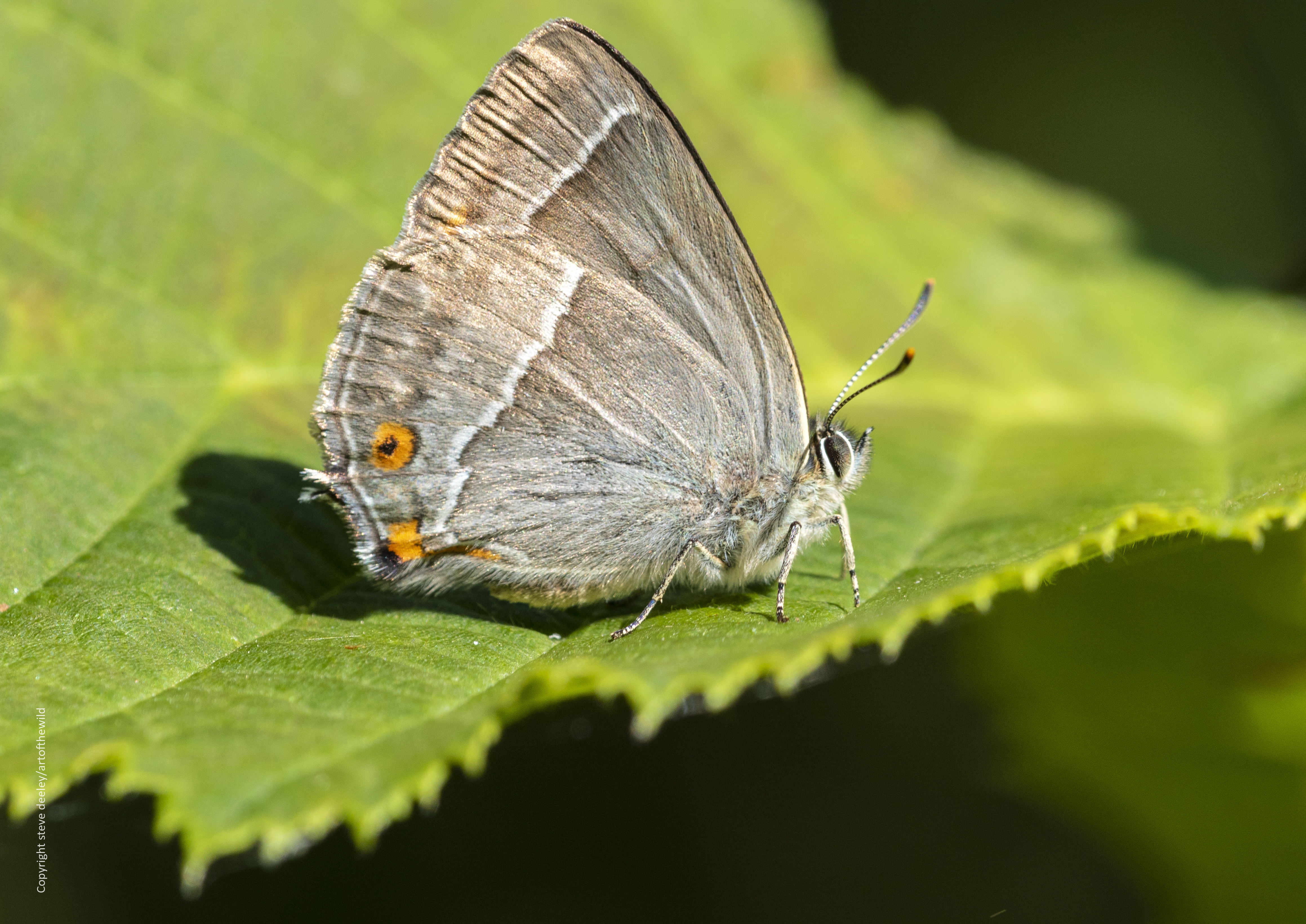
Purple hairstreak at knee height on Hazel

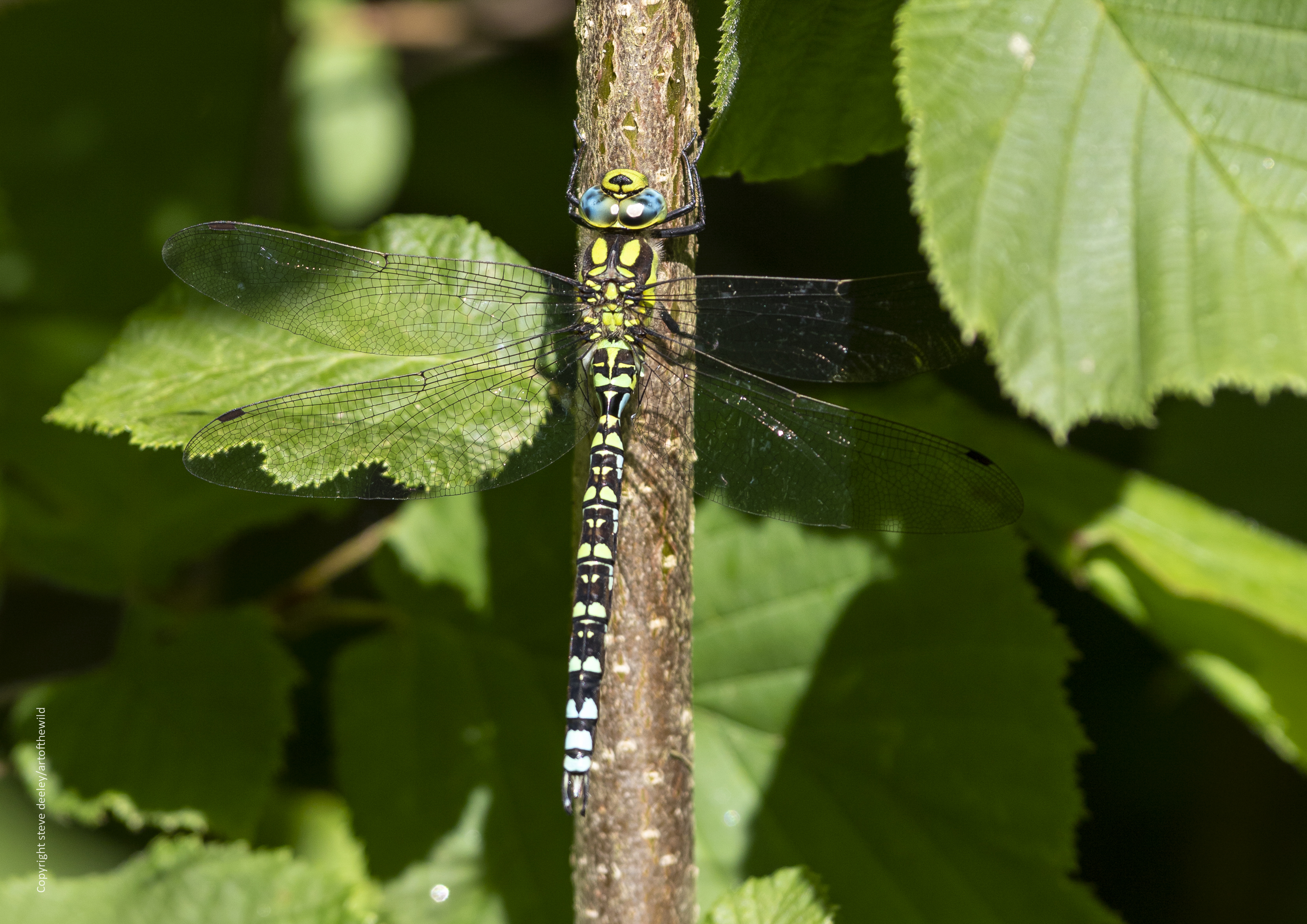
The Government is studiously avoiding the “D” word, despite several weeks with no rain. But my definition of drought is simpler. Purple Hairstreaks are butterflies that normally live most or all of their lives at the very tops of tall oak trees. For the last week or so I’ve seen them at ground level. While this is a wonderful opportunity to see these difficult-to-watch and very beautiful butterflies, the reason you can see them is that their normal foodstuff – honeydew, the sweet excretion of aphids – has dried up in the relentless sun. The Hairstreaks are desperately seeking both moisture and food, and as a result they are scouring the ground for the faintest hints of moisture. Not only that, but as the butterflies descend, the dragonflies do as well – I’ve seen several hunting just a foot or so off the ground.

Southern Hawker Dragonfly at waist height

While all of this is good news for people who like to see butterflies and dragonflies, it’s bad news for the insects themselves. As the drought continues, fewer are surviving and fewer are laying eggs. And that means that next year we may see very few of these beautiful creatures at all. So get out there and see them while the sun shines and you still can

Sometimes, the gods smile

I’ve been photographing wildlife for a while now, and getting a dry day with no photos is not unusual. Monday was a very dry day, in very sense – baking hot and I saw next to nothing, which was doubling upsetting because I’d driven hundreds of miles and taken some leave to try and photograph several hard-to-see butterflies. So when Tuesday, my last day, dawned I decided to be up early but stick to my local patch. The woodland was cool and damp and I had hardly entered when I saw a Roe Deer buck grazing. It spotted me, hesitated and trotted away.

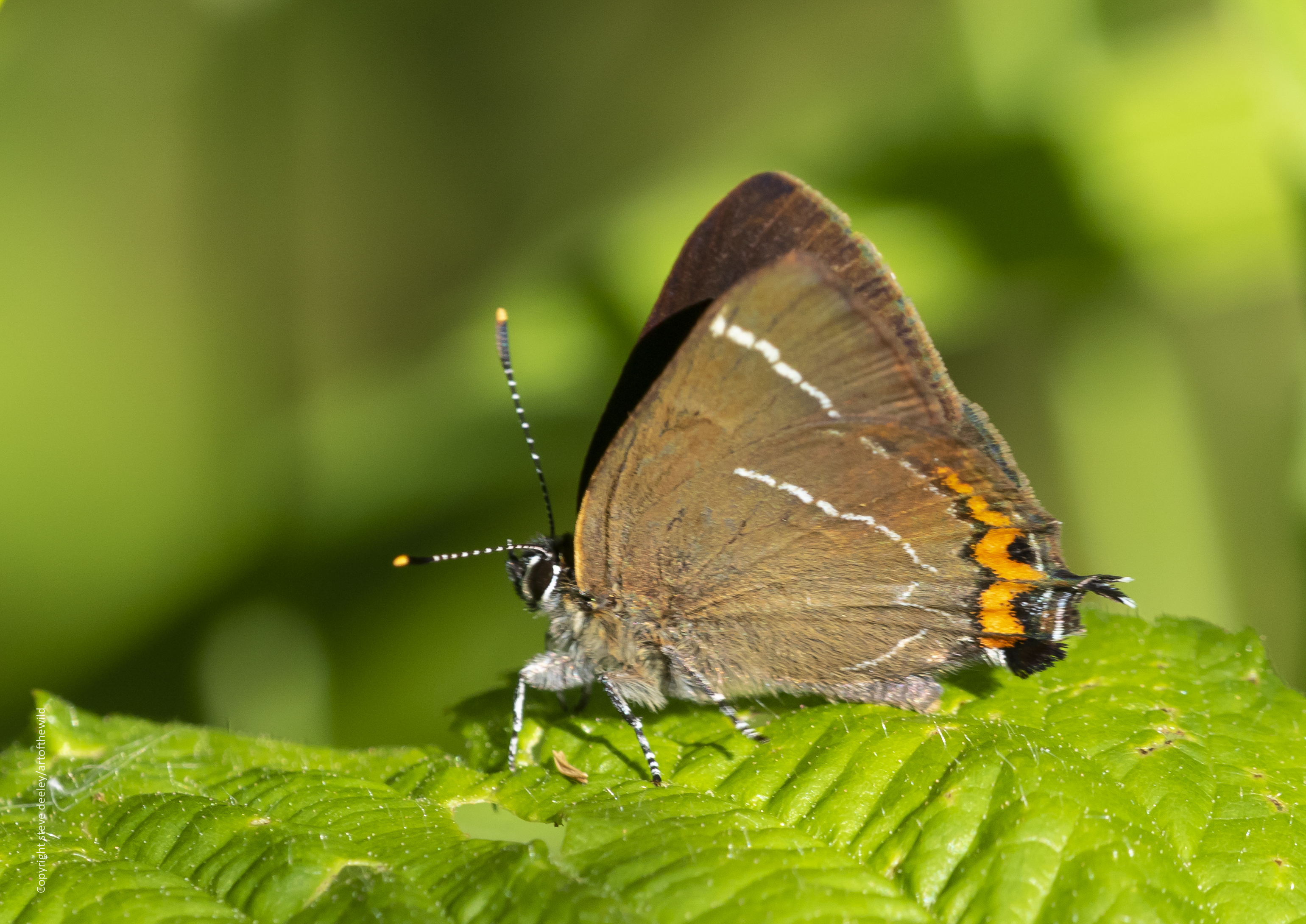
A few hundred yards further on, and something small fluttered down from the trees above me. It was a White-Letter Hairstreak, one of the butterflies I’d been looking for – not rare, but a priority species because it is an elm specialist and English elms were decimated by dutch elm disease in the 1980s. It starting drinking the faint dew on the grasses, indicating just how dry the weather had been.

Moments later, it was joined by the Purple Hairstreak, another butterfly I’d been hunting for. This one is an Oak specialist – its scientific name is “Favonius Quercus” which roughly translates to “Oak lover”. It’s common, but prefers to fly a the tops of the trees and rarely descends low enough for people to see.

My run of luck continued – I saw a young fox cub, a Dark Green Fritillary, a white  admiral and a silver-washed Fritillary, all good butterflies to see.

I returned to the same woodland in the evening, hoping that perhaps the cooler evening air might entice  a few more butterflies down. None did, and at 6:30pm, I  walked back to the car park. Right where I’d seen the Roe Deer several hours earlier, a large bird flew across the path in front of me. It perched at the top of a nearby Ash and I felt my pulse race. For the first time in my life, I was looking at a wild Tawny Owl, a bird I have longed  to see for years. I was carry just my small closeup butterfly lens, so  took a quick snap, then walked slowly until I was out sight of the Owl before sprinting hell-for-leather for my car and the big telephoto lens I had there.

You know how it is when you’re desperate. I dropped the car keys. I couldn’t get the tripod set up. I nearly dropped the camera. Eventually, flushed and shaking, I sprinted back into the woodland carry my big lens just as fast as a tubby unfit bloke with dodgy knees can. The Owl had vanished. I started to put the camera down and head back to the car when I realised it was still there – it had just moved slightly. I brought the camera up, and the Owl stared straight down the lens. The sun was setting and the light was poor, so I adjusted settings and took picture after picture, hedging my bets. And just when I reached the point where I’d run out of ideas and  thought I’d try and get a little closer, the Owl flew off.

On Monday I’d driven hundreds of miles and ended up hot, tired and empty-handed. On Tuesday I drove five and had the best day’s wildlife encounters I’ve ever had. And that is why I do what I do.

Winners and losers

I spent today again looking for the Large Blue butterfly at a site in Gloucestershire. To my astonishment, I saw it not once or twice, but 22 times over the course of four hours. At one time I saw four in the air at the same time. It’s no scientific comparison, but last year on a similar visit, I saw just 2. A week ago, I was hunting for another rare butterfly, the Black Hairstreak. I expected to find a small number, perhaps 3 or 4, and found dozens

Black Hairstreak Butterfly

Black Hairstreak Butterfly

Yet at the start of the year, I struggled to find any butterflies at all. Common species you would expect see were absent, and talking to bird-ringers in local woodlands, both the numbers and weights of the small birds they were catching were down, suggesting that there was a significant shortage of insects. People are commenting widely on the late arrival and low numbers of swallows and other insect-eating migrants.

The only way I can explain this is that the unusually cold weather we had in early spring killed off a lot of the insects that were emerging at that time. This lowered the numbers of resident and migrant insect-eating birds, and probably meant that broods of  young were smaller too – so that later in the year, when he weather has been unusually warm, there have been more butterflies hatching and fewer predators to feed on them.

It’s just a  theory, but if it’s right and the good weather holds, we could see record numbers of butterflies this summer, which given the dire state of many British species, can only be welcome news.

Big Blue and the NASH meeing

The Large Blue is one Britain’s rarest butterflies. I’ve been fortunate enough to see it several times. But the Large Blue is a butterfly which, in sunny weather, always lands with its wings closed. And that’s a problem, because with its wings closed, the extremely rare Large Blue looks exactly like the very un-rare Common Blue butterfly, but  – well, larger. But some Common Blues can grow quite large and when the butterfly is in flight, it can be hard to tell them apart.

To be certain that you’ve found the Large Blue, you have to see it with open wings – the upper wing is dramatically different to the Common Blue. And the best way to achieve that is to find a good spot, where the butterfly food plants are plentiful, and then wait for it to show up.

This was the approached I followed successfully yesterday at a site in Gloucestershire where the Large Blue still clings on. But what I hadn’t counted on was that this year has been a very good year if you’re a Horsefly, and they were holding a NASH (that’s the National Association of Starving Horseflies) meeting . I’m allergic to Horseflies, and a single bite can be enough to make my hard/arm/leg swell up alarmingly. As a naturalist, I’m supposed to like all wildlife, even the ones that bite me, but I’m prepared to make an exception – a very big exception  – for Horseflies. I was sitting still, and an easy target, so they bit… and bit… and bit.

I got my picture, and a memorable encounter with this wonderful butterfly. And I’ll remember it for months, not just because the Large Blue is hard to find and photograph, but because that’s how long it will take for the bites to stop itching. Was it worth it? Clearly it was, because I went back again today for another go.


A Hairy encounter

My ongoing search for the Duke continued last night. After work,I fought my way through heavy rush – hour traffic to Stroud, a one-hour journey that took me closer to two. I parked up and set off down the slope of the Hill to the place where I’d seen the Duke the previous evening.  And as I had the previous evening, I saw it settle three times, but each time (as it had the previous evening)it flew off just as I was bringing my camera to bear. for the rest of the three hours I was there, I had to just stand and watch as it flitted relentlessly around, without ever once stopping. I’ve started to really, really hate that insect, which is an odd position for a naturalist.

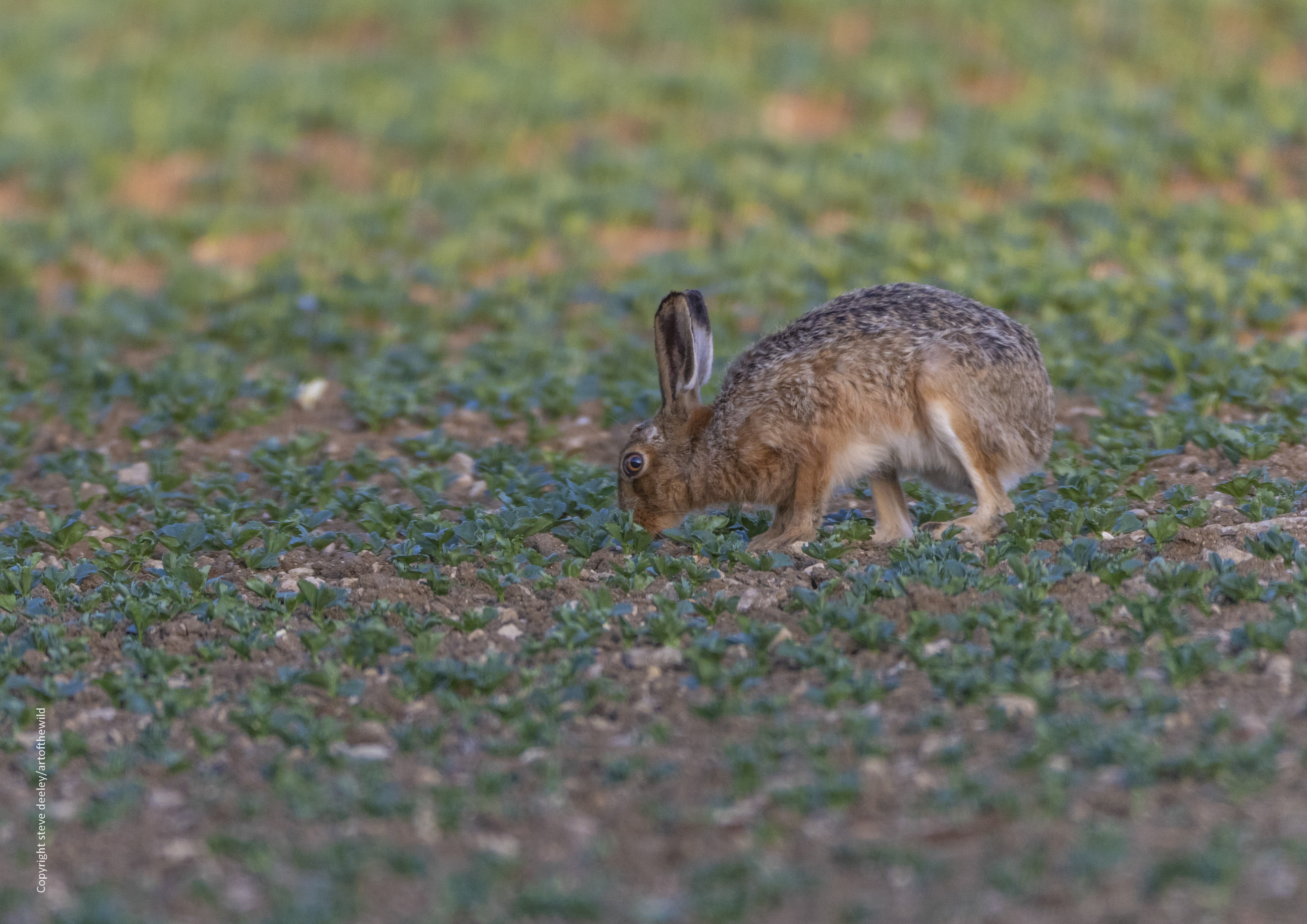
But just as with my last visit,the evening brought an unexpected compensation.  As I was driving home, disconsolate, and full of evil thoughts about spraying the bushes of Stroud with superglue, I glanced to my right and saw a Hare sitting in a field, very close to the road.  Unfortunately there were no turning spaces on the road for a couple of miles, so it was a good 10 minutes before I could throw a U – turn and come back.  There was a small layby very near to where I’d seen the Hare, so I stopped and got out.  Traffic on this road travels very quickly and makes a lot of noise, so I was able to open the boot of the car and get my camera out without any sound being audible.  It seemed that the photographs smiling me, because there was also a small gap in the roadside hedgerow that led into the very field where I’d seen the Hare.  I picked my camera up and started to push my way through the hedge, only to stop short.  For while I’d been driving back, the Hare had been hopping slowly forwards, and I realised, to my horror and delight,that he was barely 6 feet in front of me. If I moved, I would startle the Hare, and there was every chance that he would Sprint off far faster than I could get my camera set up to take a picture.  Worse still, he might never return to that field if he’d had a bad experience there.  So I had to grit my teeth and wait as he slowly moved away before I could set my camera up and take his picture.

Wiltshire was, sadly, home to the completely illegal hare – coursing world Championships this year.  Many fields of hares that I’d watched over the years had been wiped out, so it was a joy to find not one Hare, but two, grazing in the field.  And at least now I know that if I have a bad day with the butterflies, I may yet have a happy day with the hares.

larking around

This weekend I went looking for my old nemesis: the Duke of Burgundy butterfly.  It was a stinking hot day and as is usual with the Duke, who adores steeply – sloping sites, I ended up climbing up and down hills in the blazing sun.  Although I saw the butterfly twice, I couldn’t get a picture of it.  To rub salt into my wounds, I bumped into a young couple with a dog who proudly showed me a stunning picture that they had captured on their iPhone earlier that day.

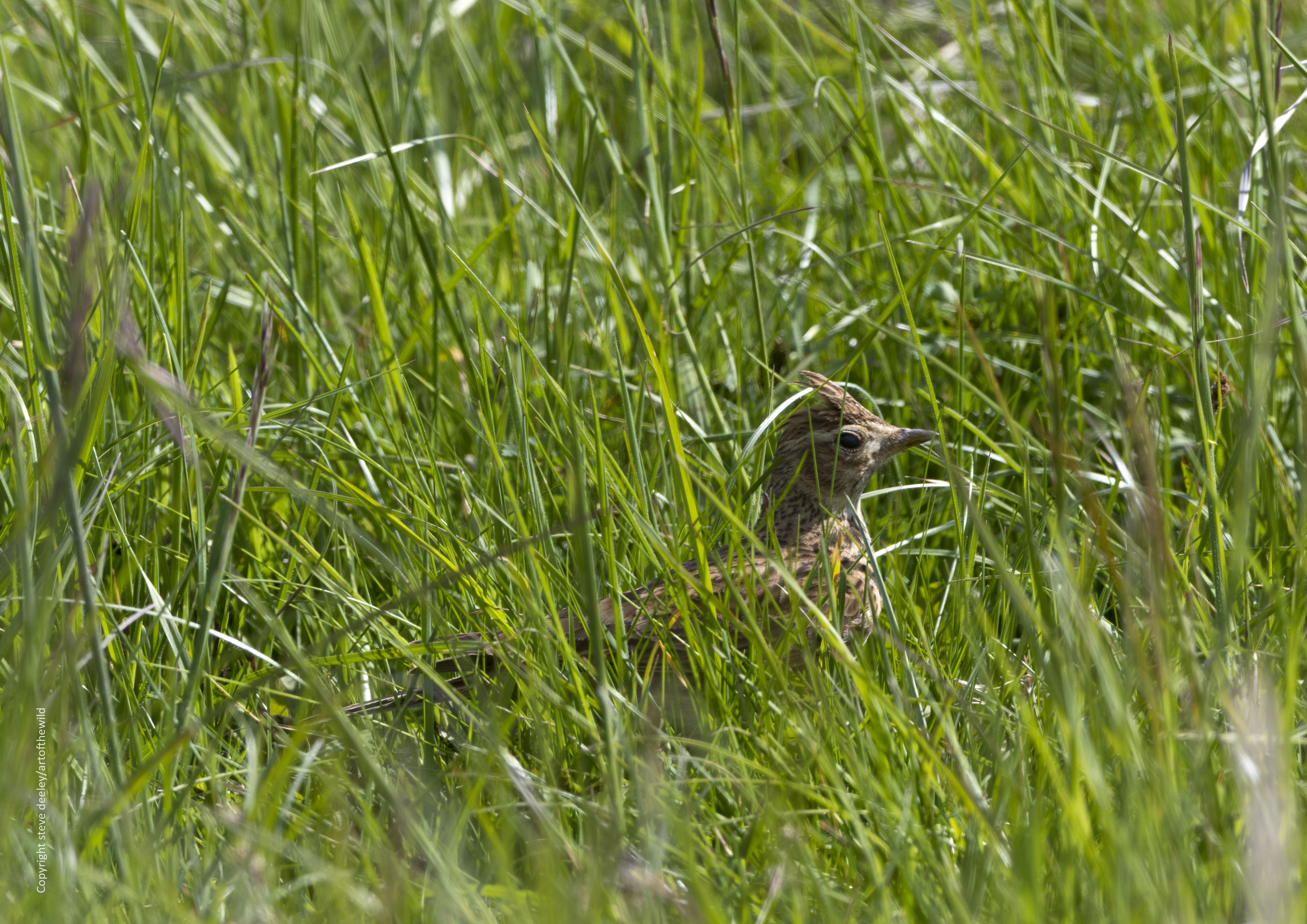
But, as quite often happens with wildlife watching, the day wasn’t without its rewards.  In the skies above me, I could hear the beautiful, lilting song of the Skylark, as evocative of warm summer days as the smell of newly-mowed grass.  That by itself would probably have been enough to make the day a winner, but then I noticed a Skylark fly horizontally quite close to the ground, and land in a bush near to me.  I took some photos, and thought little of it until I noticed a second Skylark nearby.  I sat down with my camera (and my lunch!)  and watched as the pair as they hunted for grabs in the grass, gradually getting closer to me. The Skylark is a bird that is normally elusive and extremely hard to see, but to my surprise, this pair were happy for me to get very close indeed –  they seemed quite relaxed around people, and I got spectacular views of the female Skylark in the grass.


The Skylark is a long, graceful bird, a little smaller than a Blackbird. the Skylark has a Brown – and – cream speckled further pattern, very much like a thrush, and as you can see this image, it also has a small tuft feathers on its head which you can raise and lower rather like the spoiler on a high – end car.  It’s used for signalling and displays.

Despite spending another two hours hunting for it after seeing the Skylarks, I never did manage a photograph of the Duke of Burgundy.  One of the joys following wildlife is that every year you get another chance a spring rolls in again.  So I know that in early May of 2019, be walking the slopes again in the hope the grand old Duke is flying.

Page 5 of 6

Powered by WordPress & Theme by Anders Norén