Naturalist. Nature writer. Nature photographer.

Category: Uncategorised Page 4 of 6

The real story of the evolution of the damselfly

It was a rainy day, and God’s kids were bored.  God had a lot of work to see to, so he rooted around the house to see what he could find, and came up with a packet of cocktail sticks, a tube of glue  and a watercolour paint set he had left over from working on the rainbow. He told his kids to entertain themselves and see what they could come up with he was working. And that, I am absolutely sure, is the only possible explanation for how damselflies came into being. Because no process as brutally selective as evolution could possibly have come up with them. The damselfly comes in red. Oh – and yellow and pink and green, and orange and purple and blue. And to ruin the song lyric, white and metallic green shades as well. Their eyes can be brown or blue or red or yellow or green, independent (seemingly) of their body colour. And to really drive anyone trying to identify them insane, they change colour as well. Newly-hatched damselflies (known as “tenerals”) frequently start off one colour and change to another. Females will sometimes start in one colour, then change colour to match the male.

Take the blue-tailed damselfly. It’s a fairly common species where I live in Wiltshire, and the male is easy to identify because it has a bright blue ring around its “tail” (actually, it’s a long abdomen – like someone had stretched you on the rack to an improbable degree). But the female blue-tailed comes in five different colour forms – blue is the normal, but it is also available in green, purple, orange and pink. The pictures below are both female blue-tailed damselflies.
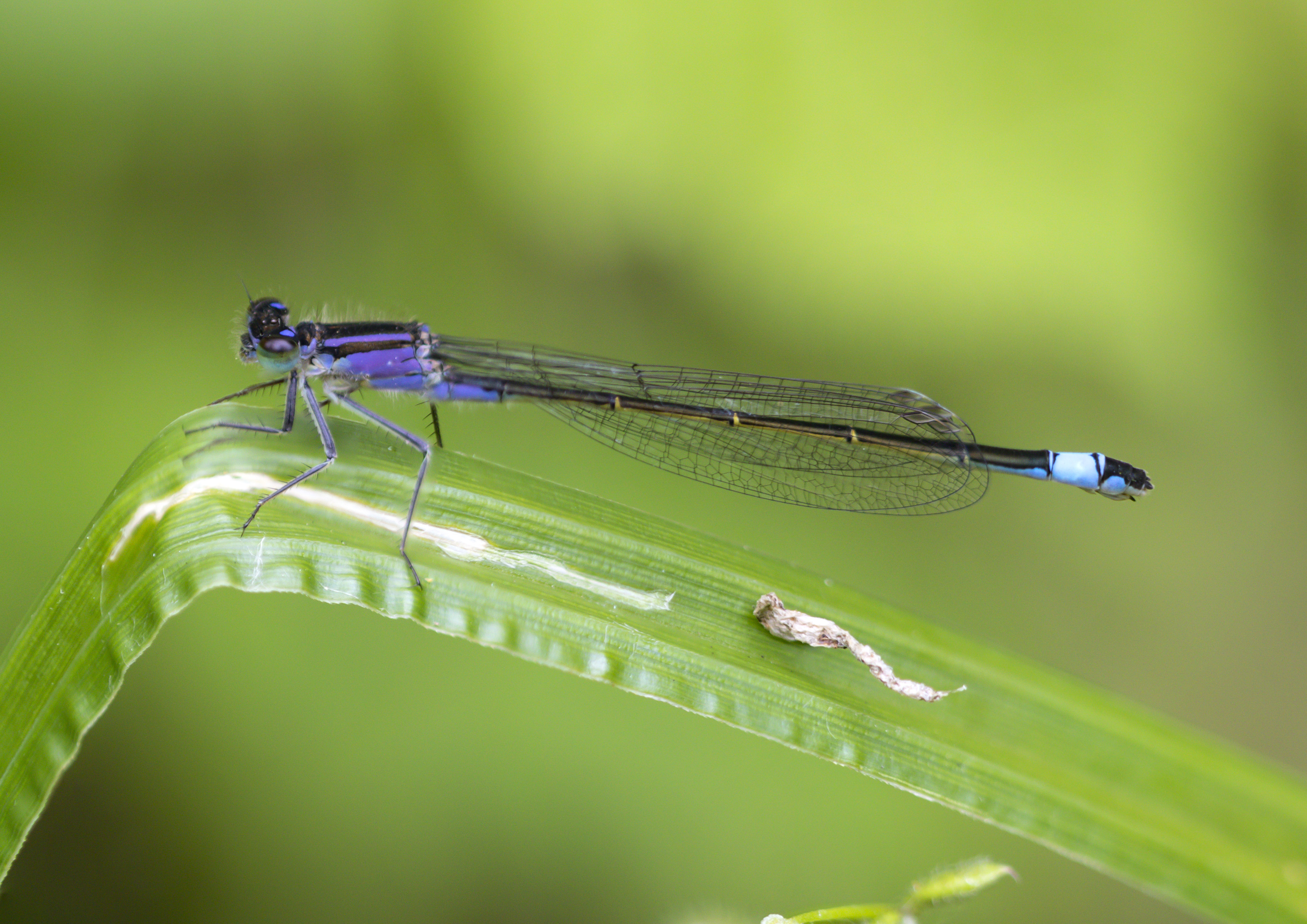
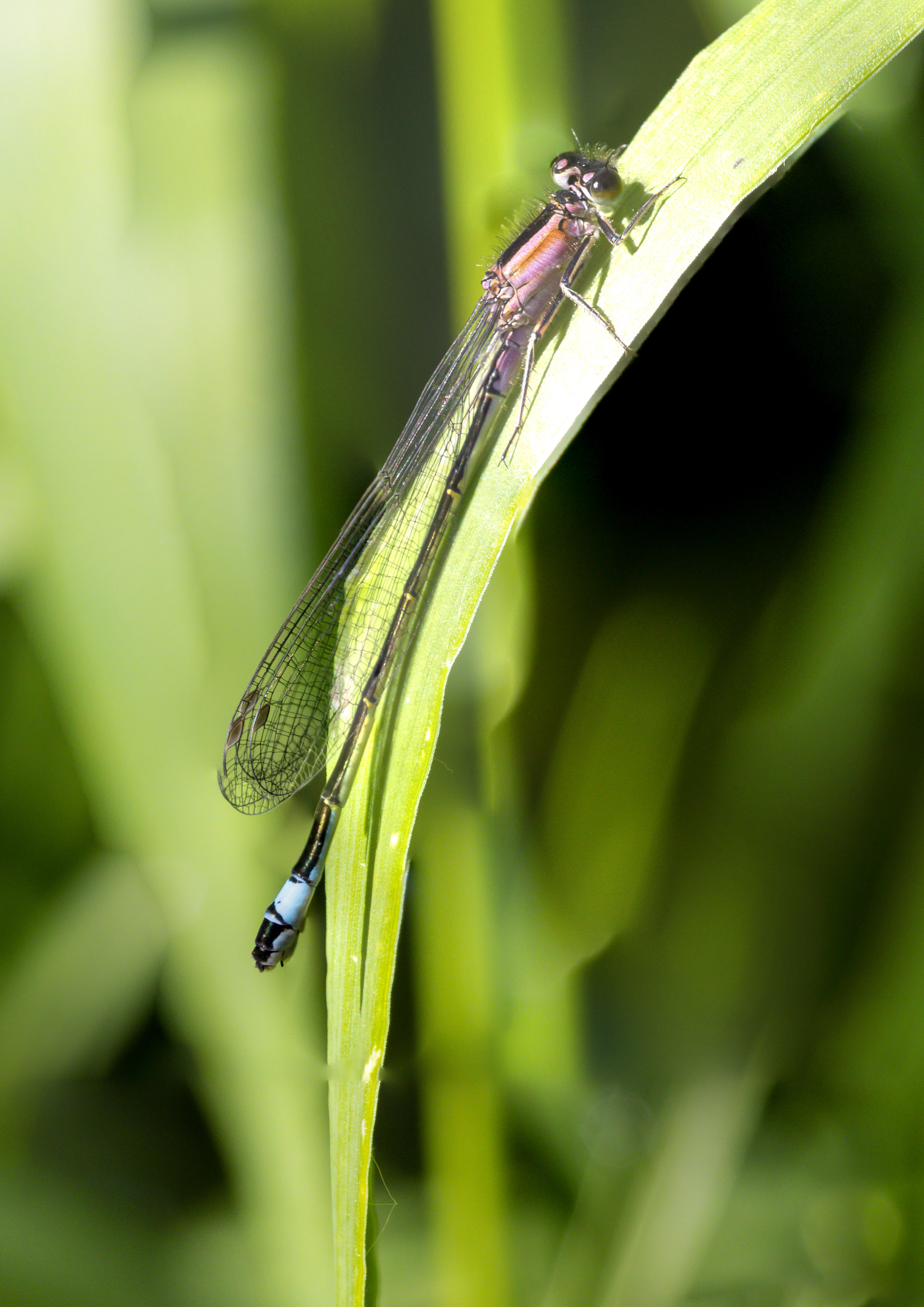
female blue-tailed damselfly

female blue-tailed damselfly

As if that wasn’t enough, some completely different species of damselflies are so strikingly similar that you need a magnifying glass to tell them apart. Take the males of the “Emerald Damselfly”, and the “Scarce Emerald Damselfly” respectively, for example.  Because both species change both eye colour and body colour on the way to adulthood, the only reliable indicator is that the Scarce Emerald has a tiny incurving bend to the tips of its inner anal appendages.

Yes, I really said that. And the inner anal appendages of a damselfly are perhaps a millimetre long. If, like me, you drove for several hours to get to a site where the Scarce Emerald is known to hang around, but where it occurs alongside the regular Emerald Damselfly, then all you can do is photograph every metallic green damselfly you see, and then zoom in on your camera screen and try and work out which it is by closely inspecting its naughty bits. It’s almost like watching pornography, but nowhere near as much fun.

But personally, I won’t hear a word against Damselflies. Because one thing these multicoloured marvels do, is eat midges. And anyone who has read my book (“Encounters – a journey to find and photograph some of Britain’s best-loved wildlife”) will know that I really, really hate midges, following an evening spent in the most midge-prone part of the UK. So here’s to damselflies, whatever their colour. And here’s to the poor male damselfly, who somehow has to recognise that the female of his species can come in a bewildering variety of colours. It seems that damselflies, at least, can’t afford to be prejudiced.

Small oddities can be big business

I recently did a three-hour round trip in order to photograph a specific damselfly – the Southern Damselfly. It’s nothing special to look at (below), and at a first glance you could mistake it for one of several other species.  But it is a distinct species, and to me that lent it a value that it might not otherwise have. I was lucky to find it so close to my home – the next nearest known location is an eight-hour round trip away.

Female Southern Damselfly

Female Southern Damselfly


Today I was researching a trip to see another rare species, the Scarce Blue-tailed Damselfly. Apart from some very subtle markings, it’s almost identical to another quite common damselfly, the (wait for it) blue-tailed damselfly. It’s just a bit more scarce. The closest reliable location to me, Latchmore Bottom in the New forest, is a four hour round trip. But as I read up on the site, I discovered that there had been attempts to restore the original flow of the watercourse that feeds the site where the damselfly lives. There were very good reasons why that work should be done – to help restore lost habitat and help protect downstream resident from the effects of flooding. Yet such actions would have probably destroyed the location of this rare insect.

Now I can imagine the frustration of those whose homes may still face flood risk because some nutter wants to protect a rare damselfly. I mean, it’s virtually identical to one you can find practically everywhere. But that ignores the lure of such things. When I did go to see the scarce blue-tailed, on a Thursday morning in school term time, there were at least four other groups of people looking for it. And one of those, a very nice couple and seemingly sane couple, had driven from Cambridge – more than an eight-hour round trip. And if they are anything like me, they all bought snacks and drinks and petrol en route.

We always seem to associate the economic benefit of wildlife tourism with the large scale. But these little insects have probably generated several hundred pounds a year for the local economy, all from a tiny insect that you could easily overlook. And that benefit will keep on coming, year after year, for as long as those insects survive. So whether you see  biodiversity as important or not, you might want to consider what is in your area that others might want to see.

The impact of fashion on evolution

Evolution is often seen as a meaningful process. As Simon Barnes noted in his book “Ten Million Aliens”, Mankind is often regarded as being the pinnacle of evolution of the ape family, as if evolution has been constantly working hard to achieve this level of perfection. It’s nonsense of course – you only have to look at certain politicians to see that Mankind has some way to go in evolutionary terms. But it’s also a mistake to think that evolution is progressive at all. Take, for example, the Mandarin duck.

The theory of evolution states that the species which survives is that which is most adaptable to change (note: Darwin did not say “survival of the fittest”, as if species had to meet some kind of predetermined health criteria). The idea is that random genetic mutation in a species leads to some new characteristics (for example, the ability to run faster) which allows that creature to survive better than its peers. As that creature breeds, it passes that advantage on to its offspring, and gradually the species improves. But there are some big assumptions inside this theory.

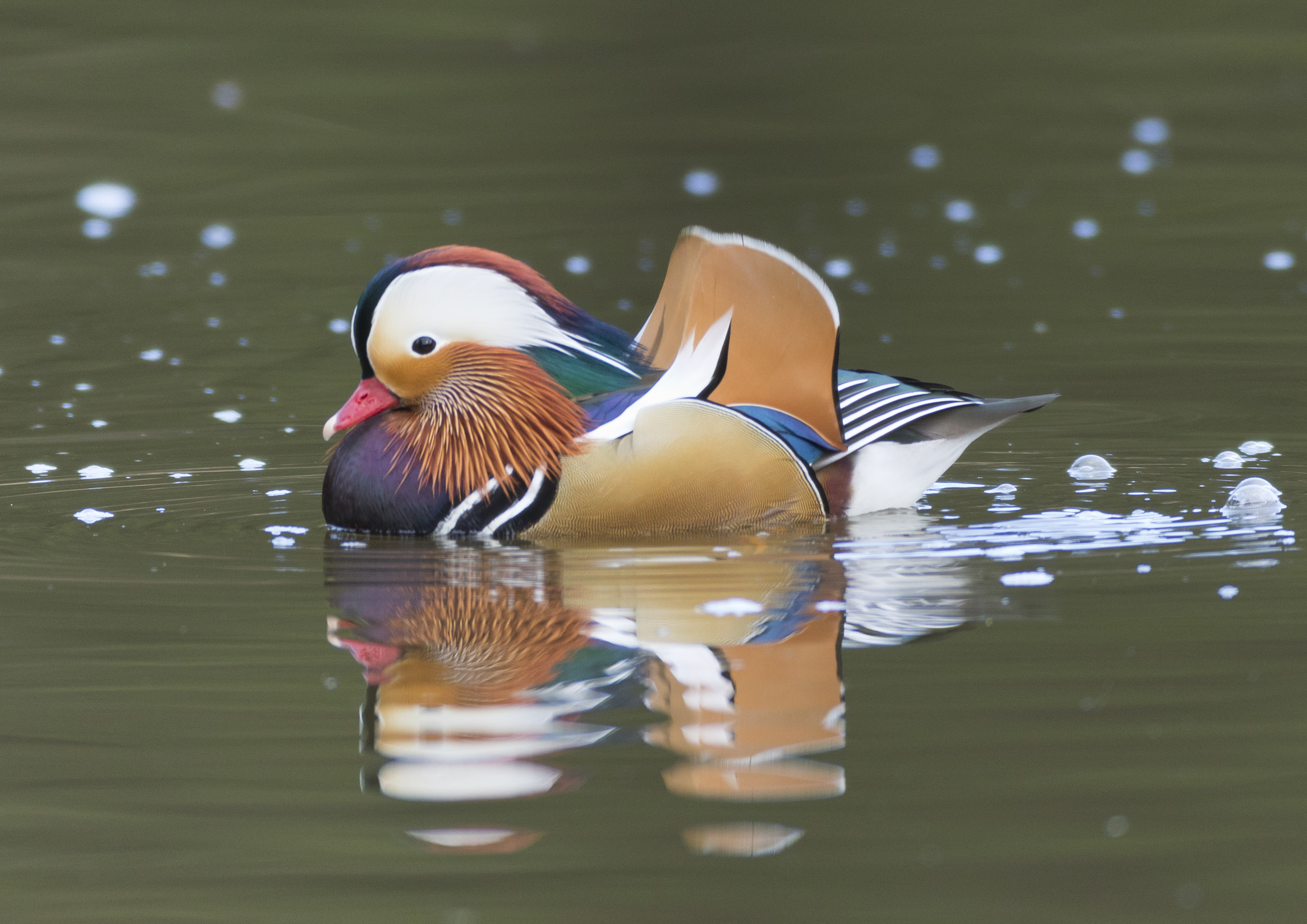
The first assumption is that the creature with the new characteristic is actually able to breed. Which is where our duck comes in. The Mandarin duck (below), is, to put it mildly, flamboyant. This beautiful colouration is there solely to attract the female and allow the male to breed. It represents a huge amount of energy directed to something which is not a matter of survival for the duck – indeed, making yourself a brightly-coloured target can only help predators home in on you, so arguably it works against the long-term survival of the species. Other ducks are dull, wearing what amount of camouflage patterns (including, ironically, the female Mandarin duck).

Mandarin drake

Mandarin drake

The second assumption inside Darwin’s theory  is that the genetic variation that produces the evolutionary advantage is a single event. But what if the random genetic change that makes our new, unique creature able to run faster is also accompanied by another that gave it a large, warty growth on its nose? Our new, faster creature gets to pass on most of its genes, useful or not. Evolution is a truly random process, and not every change brings a benefit.
Which is where fashion comes in. We like to feel that evolution isn’t something that applies to people – we’re back to that “Evolution has achieved perfection so it can stop now” idea. But of course evolution continues, and it applies to us. But Humankind is one of those species, like the Mandarin Duck, where the ability to breed is not simply linked to physical strength and health, the ability to find food and produce offspring. In the Elizabethan era, most people worked in the fields all day and so were deeply tanned. A pallid complexion which had never seen the sun was therefore a sign of wealth, and the paler you were, the wealthier you were presumed to be. So of course, in a “keeping up with the Kardashians” way, people started using cosmetics to make their skin look pale – even (ironically) Queen Elizabeth herself, arguably the wealthiest woman in the country by far. Unfortunately, the skin-whitening cosmetic of choice was white lead, a substance so toxic that its use is banned completely today. So the net effect of that fashion was to ensure that many women were unable to produce offspring –  on account of being seriously ill or dead. For what was thankfully just a short time, fashion directly impacted human evolution. And that principle continues today. Maybe there will come a time in the future when women won’t look at a man who doesn’t wear a bright pink headband. Or have sexily bandy legs. With fashion, things get unpredictable – and only very rarely does any of it have anything to do with the survival of the Human species. So the next time you worry about whether or not you should buy that pair of designer jeans, consider this: by being fashionable, you may just be contributing to the evolutionary degradation of the whole human species and our ultimate extinction. Buying a supermarket own brand is not just cheaper, you could say it’s your duty to all of Humankind.

and here’s another thing

One of the joys the study of the natural world brings is that there’s always a new fact waiting to be learned. I thought a knew quite a lot about the large blue butterfly. I knew that it was extinct in the UK. I know that it was reintroduced. I know that its caterpillars rely on a specific species of myrnica red ant, which take the caterpillar into their nest and feed it. They do so because  the caterpillar mimics the pheromones of ant grubs and (and this is the bit that blows my mind) sings the songs that the red ant grubs sing. Yes, really. I knew that the caterpillar doesn’t just mimic any old ant grub, but a queen ant grub.

But I recently met a man who was involved in the project to reintroduce the butterfly. He’s actually witnessed the large blue caterpillars being picked up and taken into the red ant nests, and he told me that when it wants to be picked up by the ants, the caterpillar also changes shape, rearing up and mimicking the body shape of the ant.

Large Blue Butterfly

Large Blue Butterfly

Every time I think I can’t be more astonished, I found out something new. This world is so special. If we lose our wildlife, as we are undoubtedly doing, we don’t just lose a pretty butterfly or a small ant. We lose the complexities and interactions and sheer wonder that millions of years of evolution can create. We lose the ideas and the chemicals and the antibiotics and all the other solutions that nature has worked out to the various problems of living. And one day, we may be badly in need of them.

Colin and identity theft

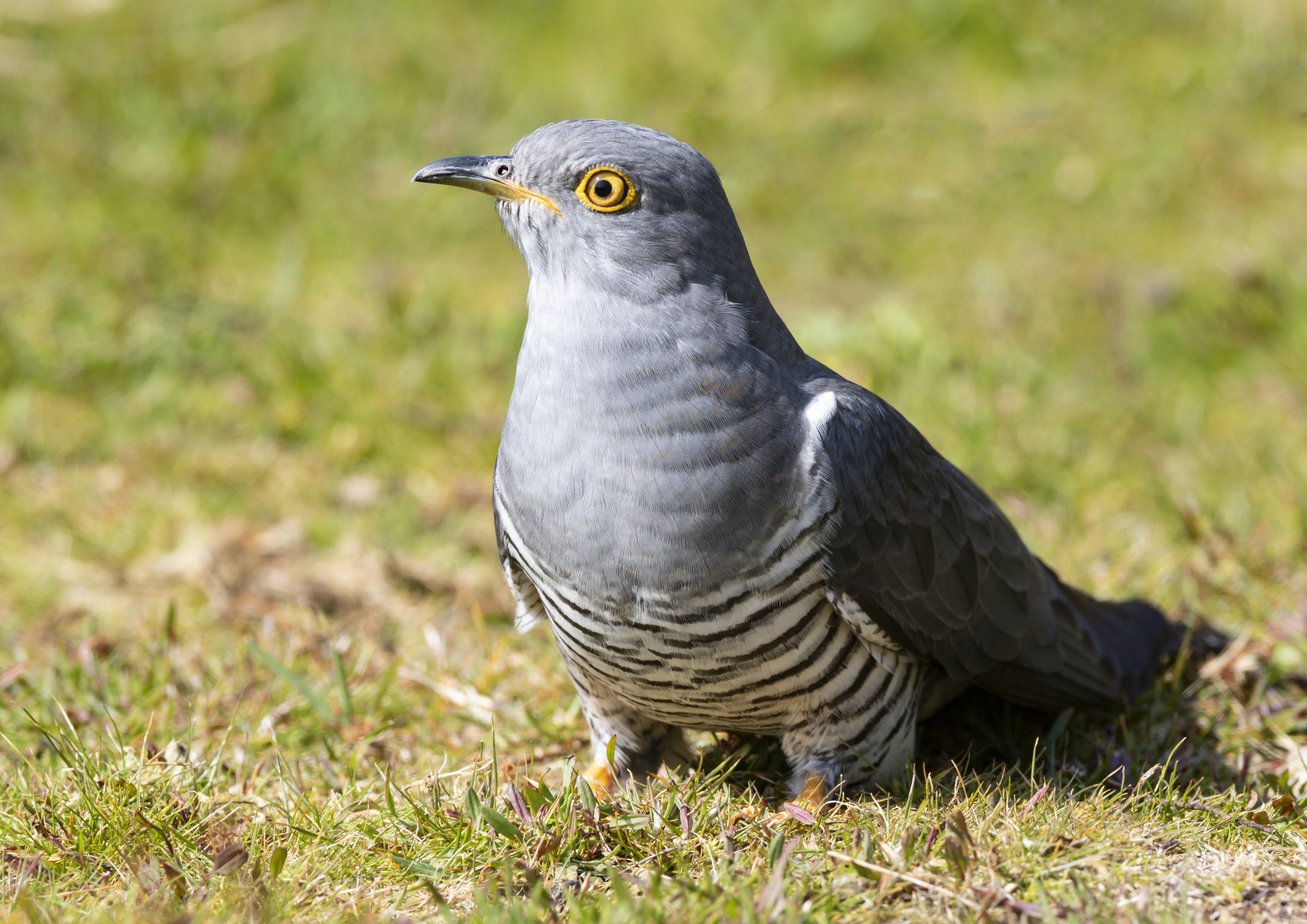
This is Colin. He is probably the UK’s (and perhaps the world’s) most famous Cuckoo. He lives on Thursely Common, in Surrey. But only some of the time

Colin the Cuckoo

Colin the Cuckoo

Cuckoos like to travel. With enviable commonsense, Cuckoos spend the British winter far from our shores, in Central Africa, where they pass the time eating. Interestingly, one thing they don’t do in Africa, is say “Cuckoo”. The call so familiar to us as a harbinger of Spring  is a mating call, and is only ever made here in the UK where the birds breed.  Colin is a bird who has become more used to humans than most. He is still a completely wild Cuckoo, and every autumn he sets off back down to Africa. But for the last few years he has grown to tolerate photographers who now gather in large numbers in a large green field in Thursley common, an otherwise fairly bleak expanse of  rather boggy heather moorland.  His affection may have something to do wit the ready supply of mealworms that are now left out for him. Sadly, the many photographers present break the rules on bait feeding (don’t do it regularly, don’t over-feed, don’t make the wildlife dependent on it), so Colin is able to spend less time foraging for food than other Cuckoos and more time concentrating on the one thing that really motivates him: sex. “Cuckoo” is a mating call, designed to drive the ladies into a frenzy, and as I’m sure you will agree, he’s a rather handsome chap. So much so that I can almost forgive the fact that Colin, like every cuckoo, started his life deceiving his unwitting foster parents that this enormous chick in their nest was actually one of theirs. Female cuckoos can actually change the colour and patterning of their eggs to suit the nest of the host species that they are using. Identity theft? Cuckoos thought of it first, and they’ve been doing it longer and better than humans ever could.


Who names these things?

I recently went in search of a creature I’ve never seen before, with the delightful name of the “Grizzled Skipper”. To me, that conjures up images of Captain Birdseye, or maybe Captain Barbarosa in the Pirates of the Caribbean films. But no,the “Grizzled Skipper” is actually a small, dark-grey-to-black butterfly.

grizzled skipper butterfly

grizzled skipper butterfly

Now this butterfly is one of a family of Skippers, and it has a fairly rough-and-ready look, so I suppose that “Grizzled Skipper” could make sense in some ways, but it’s a tiny little thing, barely bigger than my thumbnail. It looks delicate enough to blow away in a light breeze. So here’s my plea to the people who name these things: can we at last get a name that makes you think of what you’re looking at?

Build it and they will come… maybe

I went to check on some common lizards recently, in an area of Somerford Common, Wiltshire, where I’ve seen them many times. My heart sank when I saw the notices from the Forestry Commission, advising that they they were thinning out the trees. They had done that recently in areas of Savernake Forest, changing dark woodland full of brambles and ferns into open, sunlit spaces dotted with rather lonely trees and devoid of the Fallow Deer that I’d gone there to see.

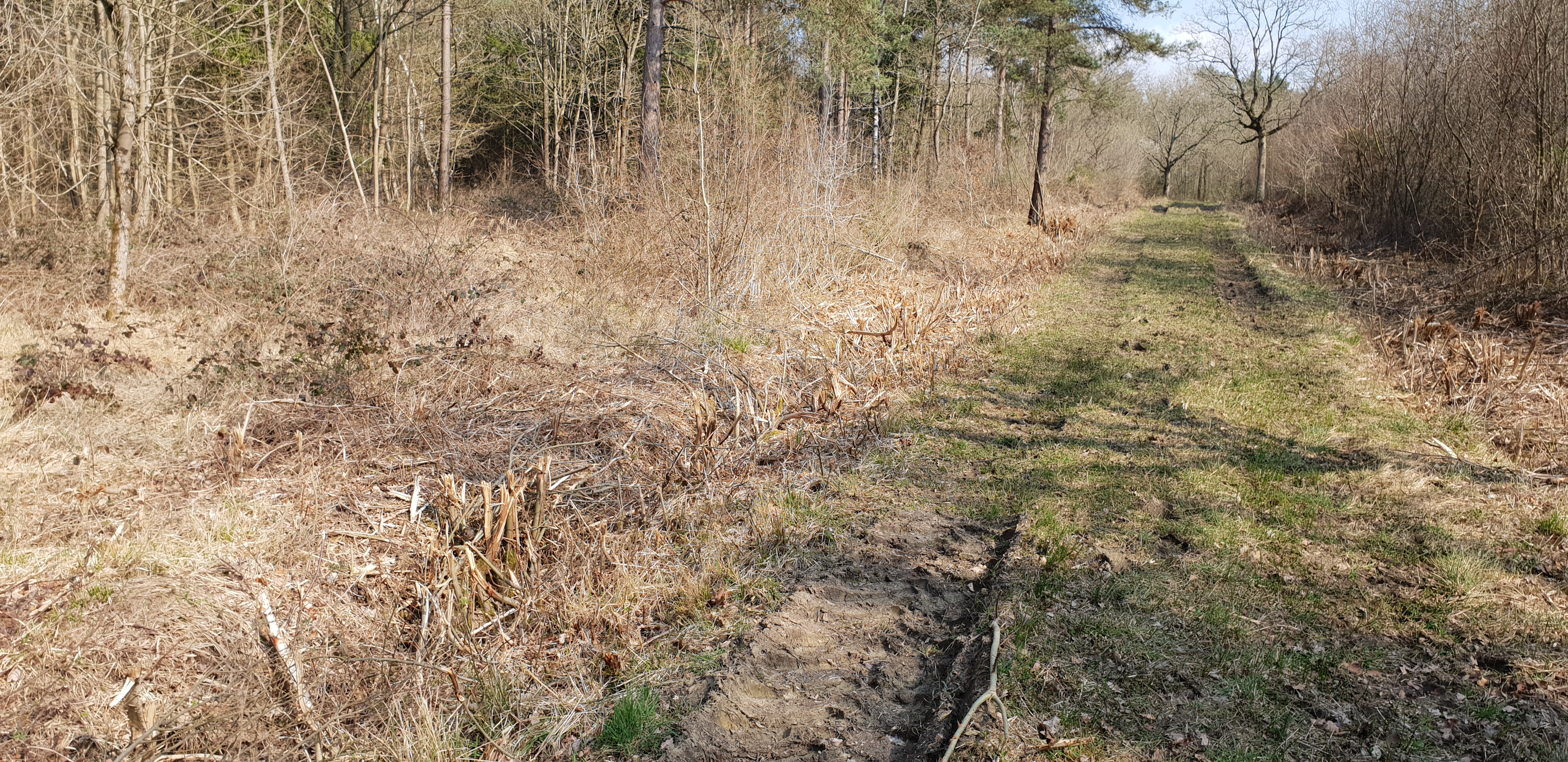
I was right to be worried. I was  met by a scene of devastation. For hundreds of yards, the bushes either side of the trail had been flailed close to the ground.  Gone were the piles of rotting wood and drifts of leaves in which the lizards lived. Gone were the flowering plants and bushes upon which bees and butterflies had nectared in the summer. Gone were the young blackthorn shoots upon which rare butterflies had laid their eggs.

flailed trail

flailed trail

One of the challenging things about conservation is that our wildlife can be particularly picky. Some species of butterfly need new growth in order to survive. Others rely on the plants that new growth gradually crowds out. Some wildlife needs dense cover, other species need light, airy spaces. Whatever actions you take to our environment, there will always be winners and losers. This truth, and the perfectly reasonable need for the forestry commission and other famers and landowners to make a living, often leads to scenes like that above. The argument is made that the habitat will return, and it will. The failed bushes will gradually re-grow. The gorse and bramble will spread again. Perfect homes for lizards and butterflies will eventually be found along the track above, just as they once were.

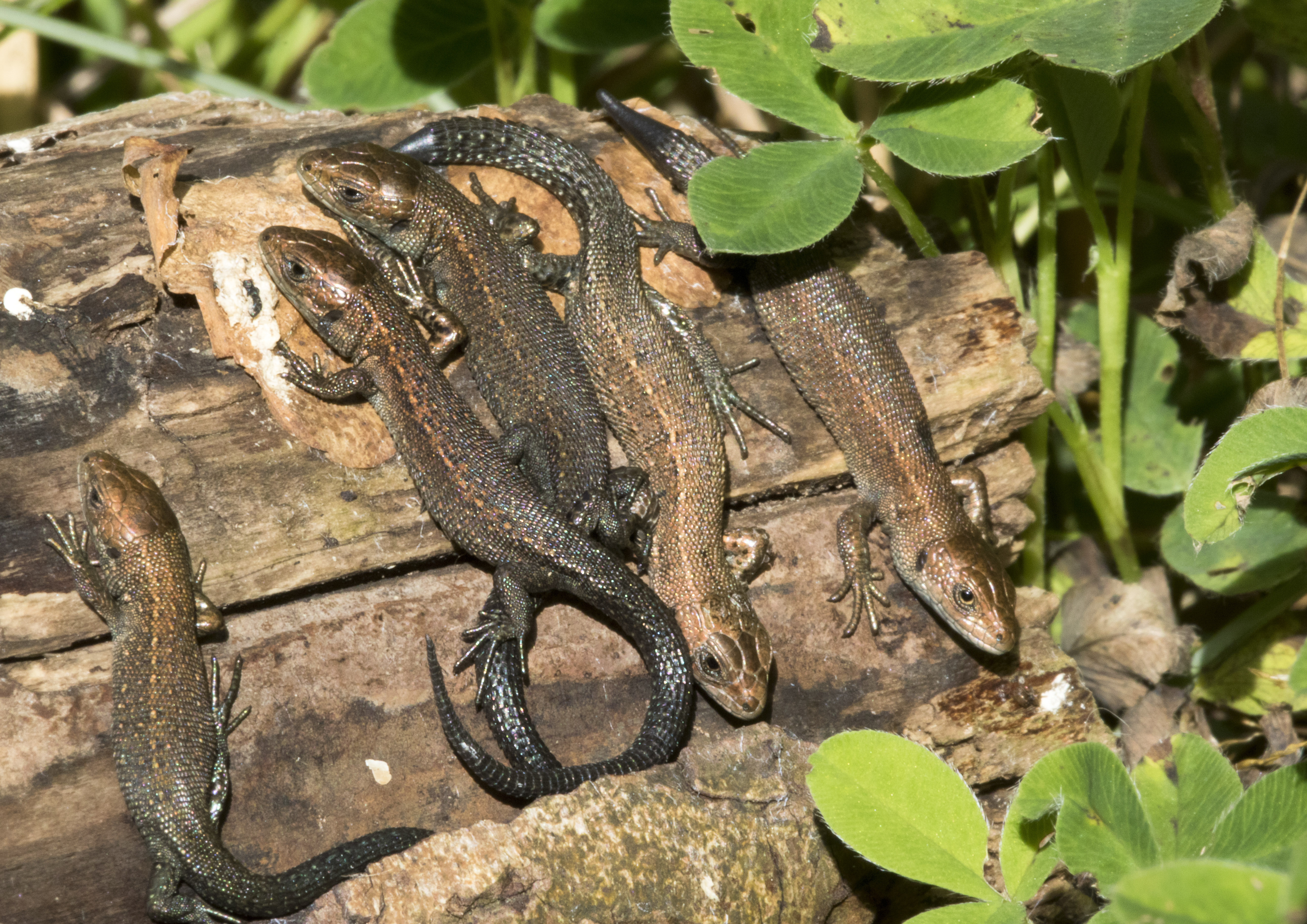
Common Lizards

Common Lizards, Somerford Common. Now the log, the clover and the Lizards are gone.

But there is a problem with this argument, which is – where do things go in the meantime? You can build the most perfect habitat imaginable, but if the species that you intend to exploit it dies before its ready, or if they cannot reach it, then it is worthless. Imagine we “solved” the housing crisis by dynamiting all existing housing stock so that we could build new flats ten years later. Or solved it by building homes in the middle of the motorway. That is the issue I have with what has been done to Somerford Common and so many other places. Rather than flail one side of a track, giving the wildlife somewhere to escape to and survive until the old habitat returns, all of the habitat has been removed – and not just along this track, but along several adjacent ones and many of the spaces in between. In lizard terms, this is ethnic cleansing.

What I would like to see is the work done in smaller stages, but it is simply uneconomic to bring heavy equipment into a forest only to do a couple of hundred yards of track. And against that argument, sadly, the wildlife will always lose.

A question of trust and respect

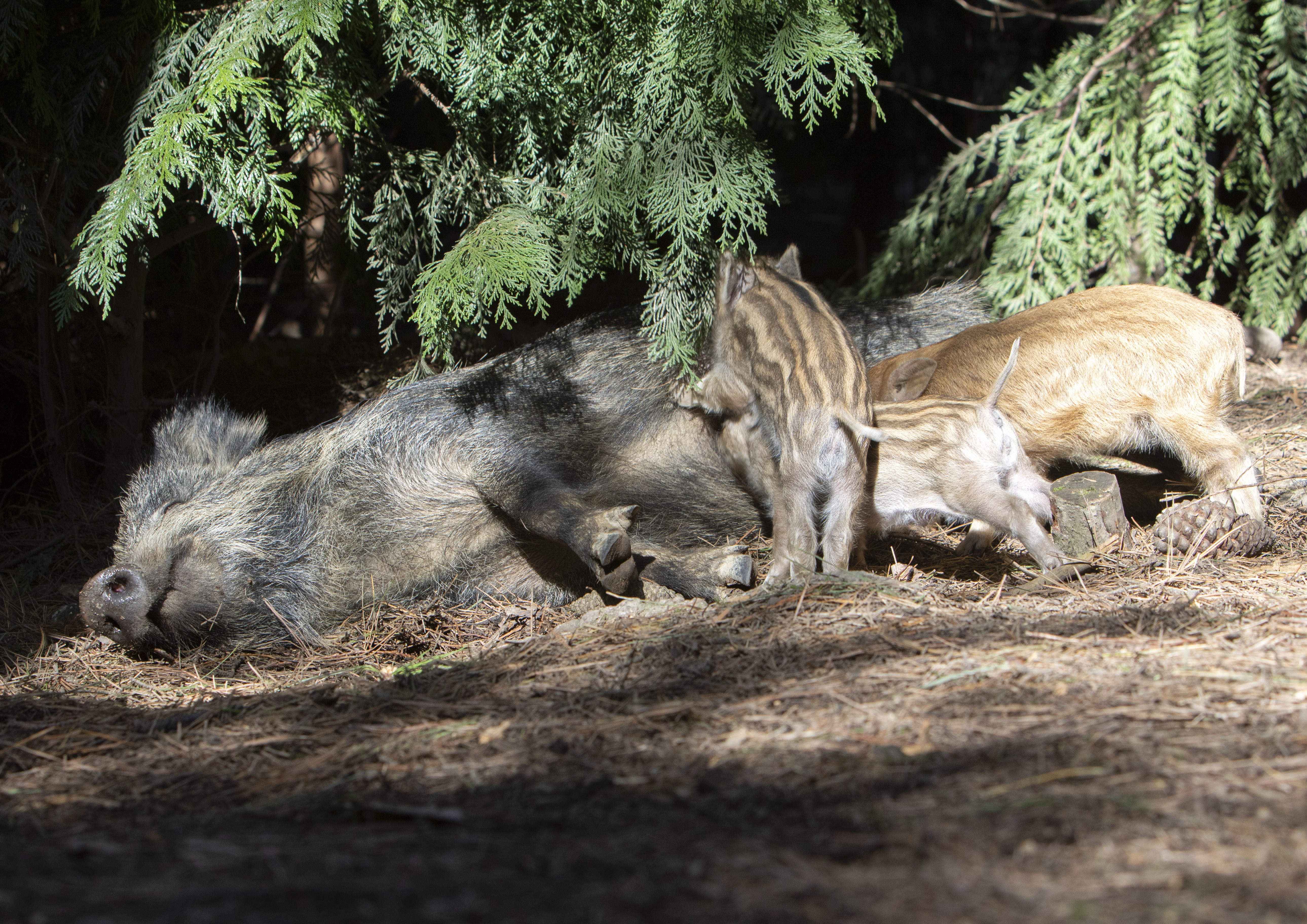
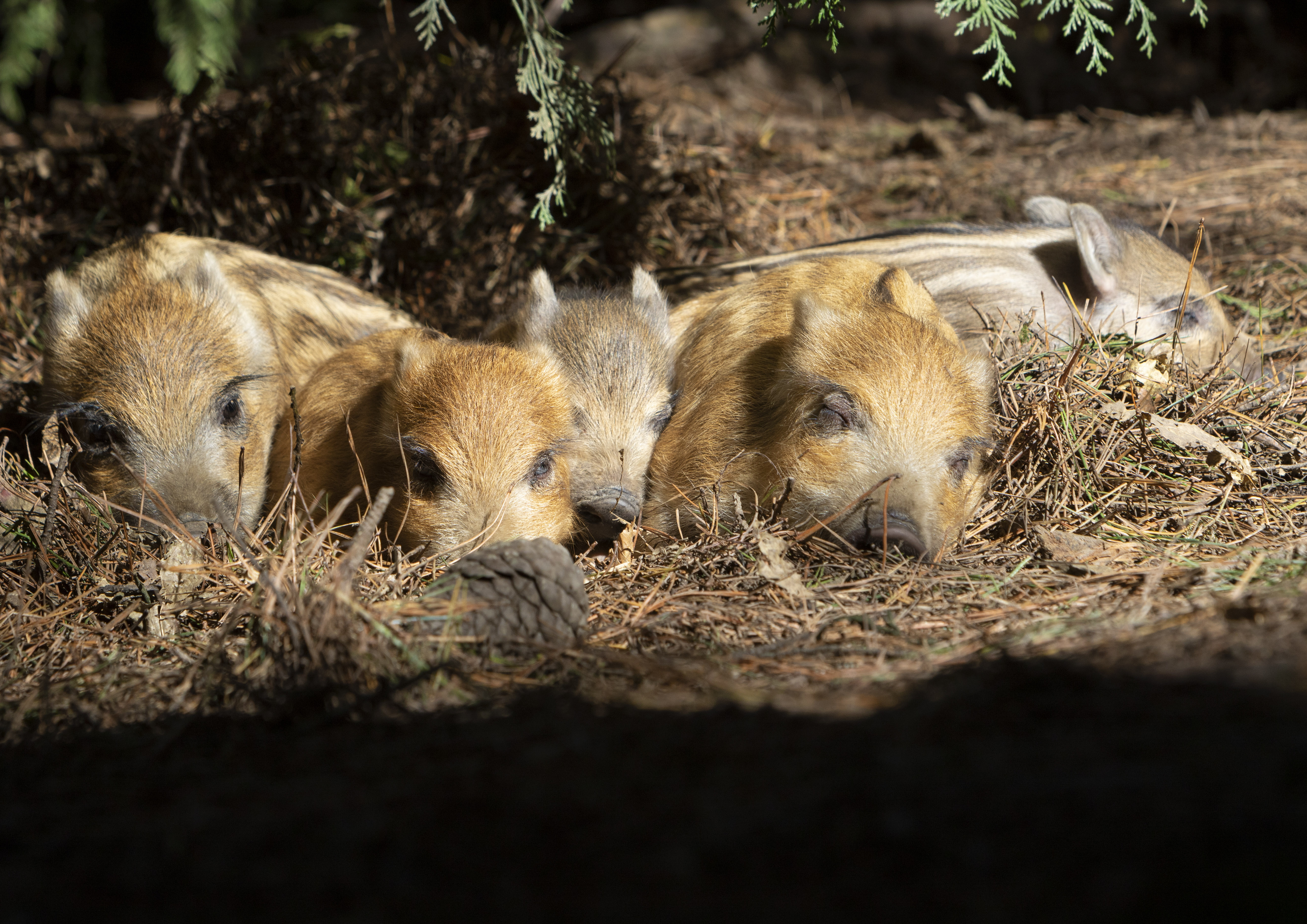
Fresh from my close encounter with Boar, a week later I went back in search of them. This time, I was fortunate enough not just to meet two females, but also their piglets, or “humbugs”. And these animals were sufficiently trusting to allow me, after a time, to sit quietly with them.

There are people who say that we should not disturb wildlife and so should never interact with them. To a large extent, I agree with that. But where human and animal treat each other with respect, where the animal is not made dependent on the human for contact, food or shelter, and where the encounter is always upon the wild animal’s terms – i.e. it can come and go, or send you away as it chooses, then I think it’s OK.  And so I was happy to sit quietly and respectfully and watch as a female boar suckled her young not fifteen feet from me, all the while fully aware that I was there. (A boar’s sense of smell is so acute that they would have known I was there if I was a hundred yards away, never mind five). I’ve had such encounters with wild animals many times now, with many different species. It is always a matter of respect and trust. Respect the animal, and all of its needs (including the need not to become so relaxed around people that it falls prey to the unscrupulous) and it may, just may, trust you back.

Boar Sow suckling

Boar Sow suckling

This sow was suckling two very different sizes of humbug, which makes me suspect that she has adopted the offspring of another female. The humbugs weren’t bothered by the arrangement. One good feed later and all were fast asleep in the sunshine. Had the ground not been so uncomfortable, I would have been as well.

Sleepy piglets

Sleepy piglets

After several hours, I left the boar, largely because I had taken every photograph I could ever imagine. When I got home, I discovered that I’d clocked up some 2,500 images. Camera shutter units do wear out, and I’d probably taken a year off the life of my camera. But it was more than worth it to spend time with these animals. Ugly or beautiful, dangerous or cute  – that’s for you to decide, but I know where my vote lies.

humbugs at play

humbugs at play

Boared to death

I went to the Forest of Dean recently. Mainly, I was looking for adders again, and pleased to find a few in a second spot. Then I went looking for boar.

Now I understand that people have mixed feeling about boar, which are large, powerful animals. The impact they have on the Forest is evident – everywhere, there are signs of boar feeding, which they do by pushing their snouts into the ground and turning it over. But boar regularly get a rather hysterical press – the latest was, sadly, that otherwise reliable publication, The Times, which descended to a headline about “superboar” who were “rampaging” through the Forest.  Well, as I can attest, although with decent fieldcraft you can generally catch sight of boar, they certainly aren’t rampaging – unless that’s your term for animals which run away at the slightest hint of a human. Nor did I see a single one with a cape. (I’m sure there’s a joke in there somewhere, something to do with Flying pigs and “superboar” –  but as you’ll have gathered, there’s a reason I don’t do stand up comedy). They are often quite hard to find.


With the help of a local Forester who knows the woods like the back of his hand, I eventually found some boar. Indeed, together we eventually found three different sounders, all with young piglets, or “humbugs” as they are known. But then came the moment when a group comprising a female and two near-adult offspring came close. And then closer. And then really close. Was this to be the moment when these dangerous animals attacked me? Past blog entries flashed before my eyes.

wild boar selfie

“superboar” selfie

No. The boar simply ambled past us, on the hunt for what they actually eat- not people, but nuts and roots and worms. Two slowly faded into the undergrowth, but one followed the same trail as us, and as we emerged five minutes later onto one of the main forest tracks, this lone boar did so as well.  Twenty feet away was a woman out for a walk. She saw the boar, and her absolute terror was plain. She immediately grabbed a large stick with which to defend herself, while the boar, realising that it had got separated from its family, just stood and looked around,  faintly confused. I explained to the woman that the boar wouldn’t hurt her, and she gradually relaxed a little, but was still obviously and immensely relieved when the boar finally twigged it had taken a wrong turn and ambled back into the trees.

Of such small victories are battles won. This one woman now knows that, when treated with respect, boar aren’t the bloodthirsty and aggressive animals they are painted as being. Not so much “rampaging” through the forest as “wandering” through it. They can certainly be a nuisance. But a threat? Perhaps not.

Vanishing quickly from a place near you

I get it. I really do. Adders are not everyone’s cup of tea. My own wife is a little leery of snakes, and I don’t blame her. They don’t walk. They slither, in a silent, unnerving way.

Snakes could do with  a good PR agency. They certainly get bad press. Think of Kaa in the Jungle Book. And who was really to blame in the Garden of Eden? They are synonymous with Evil and nasty things that bite.

Female Adder

Female Adder

Adders in particular are unloved. Wrongly billed as Britain’s only venomous snake, they are feared even by people who have never seen one. Which may well be most people before long, as recent research shows that Adders, always good at vanishing into the undergrowth, are now disappearing from the country.

A recent report by Emma Gardner of the University of Reading, has revealed a catastrophic decline in Adder numbers. So what? I hear you ask? Well love or loathe them, Adders are a good indicator species. Where they thrive, wildlife in general is usually doing well. Where they aren’t, the area’s wildlife is usually impoverished. Their loss should be a concern to anyone who loves wildlife, scaly or otherwise.

One interesting fact revealed by the study is that, contrary to what you’d expect from a warmth-loving animal,  Adders emerge from hibernation earlier in the North than the South. It seems that even Northern Adders are tougher than their soft Southern counterparts.

More research is needed, but the report’s conclusion is that the biggest threat to Adders is unthinking human disturbance. Adders are, it seems, are just as easily upset by people as people are by Adders. So perhaps it’s time that we each gave the other a bit of space, and left these magnificent animals alone.

You can read the full text of Emma’s study, for free, by following the links from here:

https://www.reading.ac.uk/news-and-events/releases/PR794608.aspx

Page 4 of 6

Powered by WordPress & Theme by Anders Norén